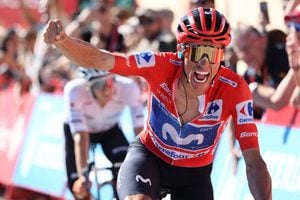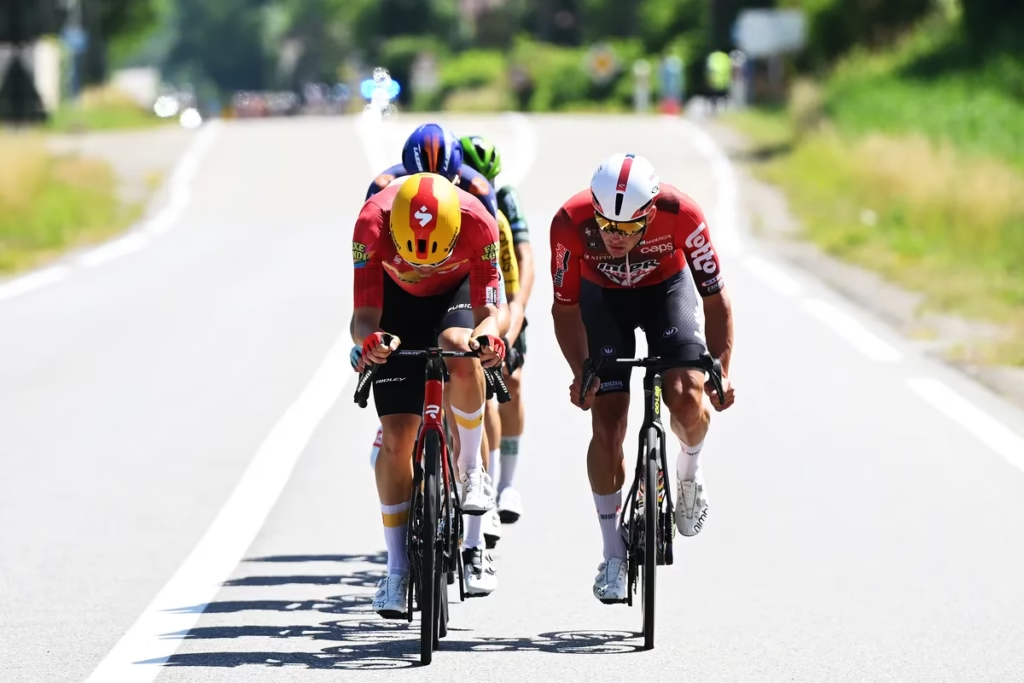
A breakaway in the Tour de France is when one rider, or a group of riders, attacks away from the main peloton and rides ahead of the bunch. It is one of the most familiar sights in the race: a small group working together at the front, with the peloton chasing behind and the time gap shown on screen.
The idea is simple, but the tactics are not. A breakaway can be a genuine attempt to win the stage, a move to collect mountains points, a way to take intermediate sprint points, a team tactic to help a leader later in the day, or a chance for a smaller team to get visibility in the biggest race in cycling.
Most Tour de France stages include a breakaway at some point. On flat stages, the break is often caught before the sprinters contest the finish. On hilly or mountain stages, it may survive if the peloton does not want to chase or if the terrain makes control too difficult. Some of the Tour’s best stage wins come from riders who gamble early and make the move last all the way to the line.
That is why breakaways matter so much. They stop the Tour from being only a battle between the yellow jersey favourites and the fastest sprinters. They give stage hunters, domestiques, climbers, rouleurs and smaller teams a route into the race. For more 2026 context, see our Tour de France 2026 route: best days for breakaways, Tour de France 2026 breakaway stages ranked and Tour de France 2026 breakaway specialists to watch.
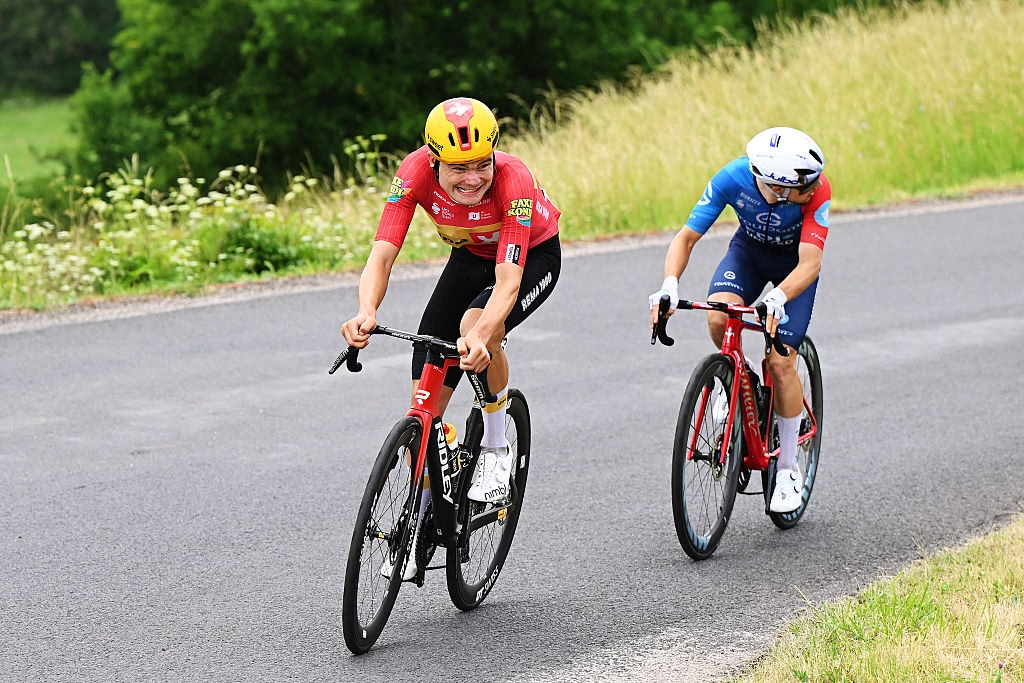
Breakaway meaning in the Tour de France
A breakaway means a rider or group has broken away from the peloton. The peloton is the main bunch of riders, usually containing most of the race. Once a gap opens, the breakaway becomes a separate group at the front of the stage.
The breakaway can be tiny or huge. Sometimes it is one rider riding alone. Sometimes it is two or three riders. On harder stages, especially hilly or mountain days, the breakaway can contain 15, 20 or even more riders.
The basic goal is to stay ahead for as long as possible. A breakaway may last 20km, 100km or the whole stage. If it reaches the finish before the peloton, the stage winner comes from the breakaway.
A breakaway is different from a single attack. An attack is the acceleration that creates the move. The breakaway is the group that forms once that move has opened a real gap and the peloton has stopped immediately closing it down.
For the riders most likely to make those moves in 2026, see our Tour de France 2026 stage hunters to watch.
What is the peloton?
The peloton is the main group of riders in a road race. It is where most riders spend most of a normal stage because riding in a bunch saves energy. Riders behind others get shelter from the wind, which means they can use less effort than riders at the front.
This drafting effect is the main reason breakaways are hard to make successful. A small group ahead has fewer riders to share the work. The peloton has more riders, more teammates and more shelter. If enough teams chase properly, the bunch can usually bring a breakaway back.
But the peloton is not one single team. It is a collection of teams with different goals. Some want a sprint. Some want a quiet day for their GC leader. Some want to save energy. Some want a rider in the break. That mix of interests decides whether a breakaway gets a chance.
For more on the way teams share work, see how Tour de France teams work, what is a domestique at the Tour de France? and our Tour de France 2026 team-by-team guide.
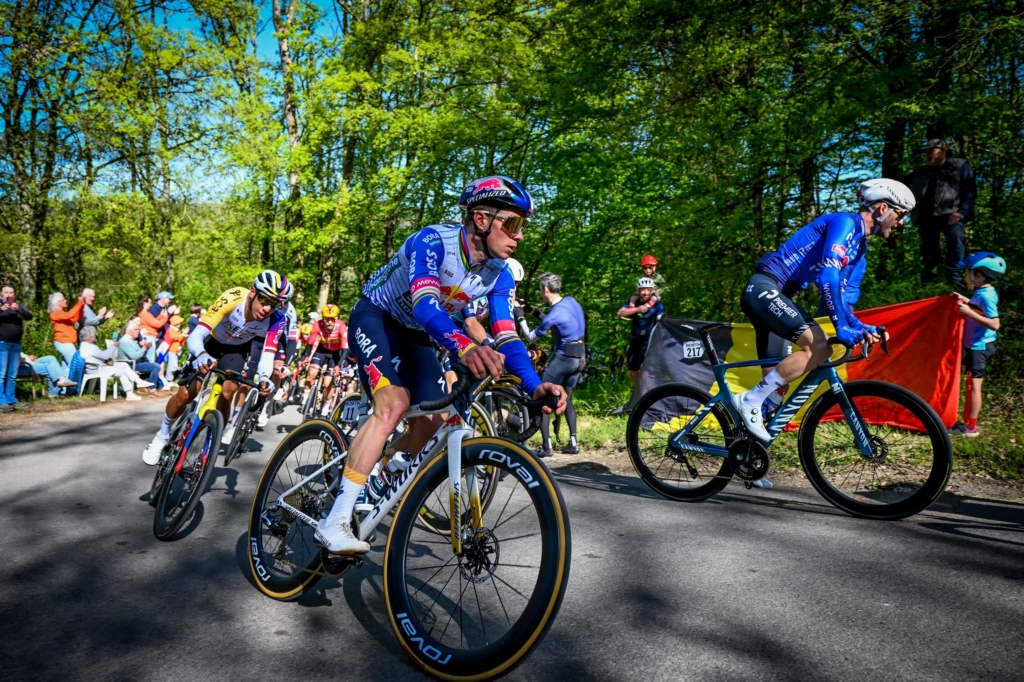
Why do riders join a breakaway?
Riders join breakaways because it gives them a chance to achieve something they may not get from the peloton. The biggest reason is stage victory. A rider who cannot beat the best sprinters in a bunch finish or the best climbers on a summit finish may still be able to win from a breakaway.
Some riders attack for jersey points. Climbers can collect points towards the polka-dot jersey by crossing categorised climbs near the front. Fast riders can collect points at intermediate sprints before the peloton arrives. Those points can matter later in the race.
Some breakaways are tactical. A team may send a rider up the road so they can help a leader later in the stage. That rider can become a satellite rider, waiting ahead in case the leader attacks or needs support after a climb.
There is also visibility. The Tour is the biggest race in cycling, and riders in the breakaway can spend hours on television. For teams without a realistic GC or sprint leader, that can be valuable. But the best breakaway riders are not only chasing TV time. They are choosing days where the move has a real chance.
For the jersey angle, see our Tour de France 2026 jerseys explained.
How does a breakaway form?
A breakaway usually forms early in a stage. Riders attack from the peloton, others follow, and the bunch decides whether to chase or let the move go.
On an easy sprint stage, this can happen quickly. A few riders attack, the peloton accepts the move, and the gap grows. On a hard stage, the opening can be brutal. Riders attack again and again, groups form and are caught, and teams fight to place the right rider in the move. This is often called the fight for the break.
The fight for the break can be one of the hardest parts of a stage. It may take an hour or more before the right group gets clear. Strong riders mark each other. Teams try to avoid missing the move. The peloton may refuse to allow dangerous riders to go.
Once a group is allowed away, the gap begins to grow. The stage then settles into a pattern: the breakaway rides ahead, the peloton controls or waits behind, and the time gap becomes the main story.
For more on why the start of a stage can be so hard, see how fast do Tour de France riders go?.
 Photo Credit: Getty
Why does the peloton let a breakaway go?
The peloton lets a breakaway go because chasing takes energy. If the riders in the breakaway are not dangerous to the overall classification and do not threaten a major team’s stage plan, the bunch may decide it is better to let them ride ahead.
On a flat stage, sprinters’ teams often allow a small break to go early. That gives the day a stable shape. The breakaway gets a few minutes, then the sprint teams slowly reduce the gap before catching the riders close to the finish.
On a mountain stage, GC teams may allow a breakaway if the riders are far behind overall. If nobody in the break threatens the yellow jersey, the main favourites can save energy and focus on each other.
On hilly stages, the decision is harder. Sprint teams may not be confident they can survive the climbs. GC teams may not want to spend energy. Other teams may refuse to help chase. That is when a breakaway can become really dangerous.
Breakaways survive when the peloton’s interests are divided. For examples of those stages in the 2026 race, see our Tour de France 2026 breakaway stages ranked.
Why does the peloton chase a breakaway?
The peloton chases a breakaway when the riders ahead threaten something important.
On flat stages, the sprinters’ teams chase because they want a bunch sprint. If Jasper Philipsen, Tim Merlier, Olav Kooij, Biniam Girmay or another fast rider has a good chance of winning, their teams will usually help control the break.
On GC stages, a team may chase if the breakaway contains a rider close enough on overall time to threaten the yellow jersey. A rider who is 45 minutes down might be allowed to go. A rider who is only three minutes down probably will not.
Teams can also chase because of points. If a rival in the green jersey or polka-dot jersey competition is in the break, another team may ride to limit how many points they collect.
Sometimes teams chase simply because they believe they can win the stage from the peloton. If a team thinks its leader is the strongest rider on the finish, it has a reason to bring the breakaway back.
For more on how the classifications shape tactics, see Tour de France 2026 jerseys explained, Tour de France 2026 sprinters guide and how the Tour de France general classification works.
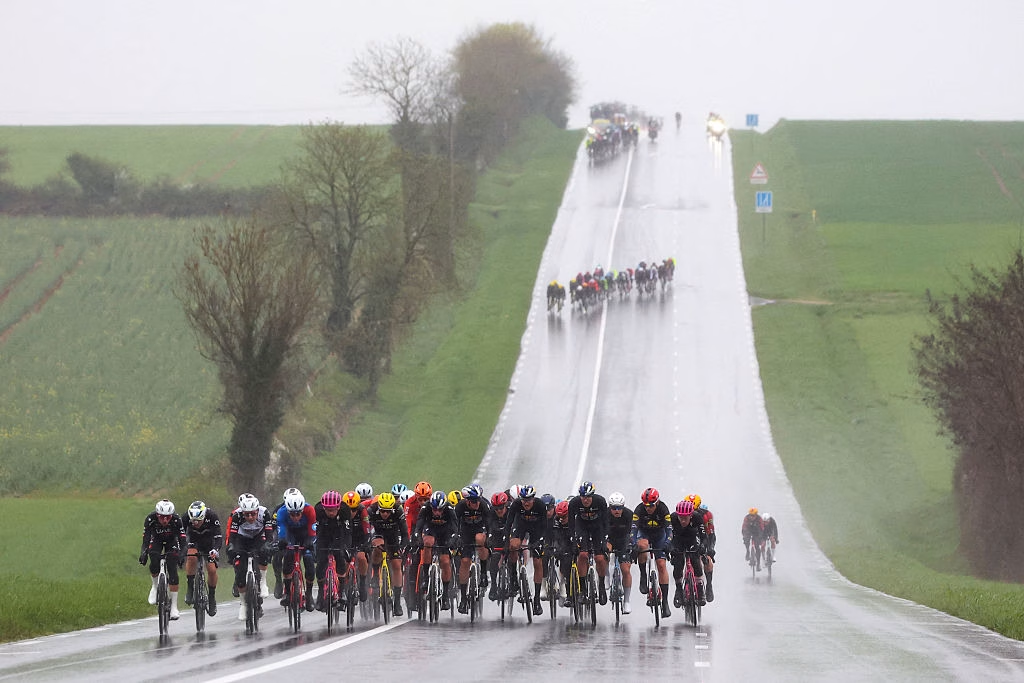 Photo Credit: Anne-Christine Poujoulat/AFP
What is the time gap?
The time gap is the difference between the breakaway and the peloton. If the breakaway has a gap of four minutes, it means the peloton is four minutes behind the riders at the front.
The time gap is one of the most important parts of watching a breakaway. If the gap is falling quickly, the break is in trouble. If it stays stable, the front group still has a chance. If it grows late in the stage, the peloton may have misjudged the chase.
On flat stages, the bunch often manages the gap carefully. The sprint teams do not want to catch the break too early, because that can invite new attacks. They also do not want to leave it too late. A common old rule is that a committed peloton can close around one minute per 10km, but that depends heavily on wind, terrain, fatigue and how many teams are helping.
On hilly and mountain stages, the gap is harder to read. A five-minute lead may be huge on a rolling stage but fragile before a major climb. The riders in the break, the road ahead and the motivation behind matter as much as the number on screen.
For broader Tour basics, see our beginner’s guide to Men’s Tour de France 2026.
What is a doomed breakaway?
A doomed breakaway is a break that is very unlikely to survive to the finish. This usually happens on flat stages when several sprint teams are committed to a bunch finish.
That does not mean the riders are wasting their time. They may be chasing exposure, intermediate sprint points, mountains points, combativity awards or team instructions. They may also be hoping the peloton miscalculates.
Doomed breakaways are part of the Tour’s rhythm. They give the stage shape. They force the peloton to work. They give smaller teams visibility. Occasionally, they become less doomed than expected if the chase behind is disorganised, the weather changes or the road becomes harder than planned.
The difference is expectation. On some days, a breakaway is unlikely to win but still useful. On others, the breakaway is the main route to stage victory.
For the stages where sprint teams are most likely to keep control, see our Tour de France 2026 sprint stages ranked.
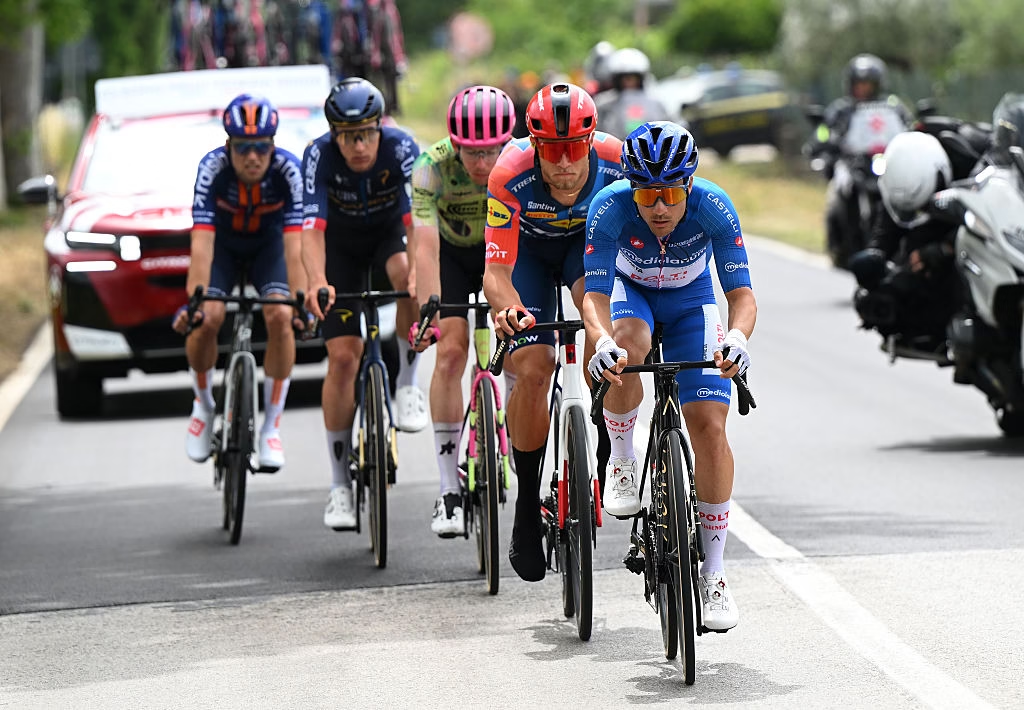 Photo Credit: Getty
What is a successful breakaway?
A successful breakaway is one that achieves its aim. The clearest example is a breakaway that stays away and wins the stage. But that is not the only kind of success.
A breakaway can succeed if a rider collects enough mountains points for the polka-dot jersey. It can succeed if a team gets a satellite rider ahead to help a GC leader later. It can succeed if a rider takes intermediate sprint points or forces another team to chase all day.
A rider can even be caught and still have done the job. If their attack made rival teams spend energy, helped a teammate, or kept their team visible, the move may still have been worthwhile.
Cycling tactics are not always judged only by who wins the stage. The breakaway can shape the race even when it does not reach the finish first.
For riders most likely to convert those moves, see our Tour de France 2026 stage hunters to watch.
Why do breakaway riders work together?
Breakaway riders work together because cooperation helps them stay ahead. When riders take turns on the front, they share the effort and keep the speed high.
This is often called rotating or riding through-and-off. One rider pulls at the front, moves aside, drops back into the group, and another rider takes over. If the rotation is smooth, the breakaway can ride efficiently.
The problem is that every rider in the breakaway is also a rival. They need each other to stay away, but they do not want to use so much energy that they cannot win the stage. This tension gets stronger near the finish.
If riders stop working, the group slows and the peloton gains time. If one rider refuses to take turns, the others may become angry. That rider may be saving energy for a sprint or may be under team orders not to work.
Breakaways are built on cooperation, but they usually end in suspicion.
Why do riders attack from the breakaway?
Riders attack from the breakaway because they do not all want the same finish. A climber does not want to arrive at the line with a faster sprinter. A slower finisher may need to attack early. A rider with strong legs may want to reduce the group before the final kilometres.
This is when the breakaway becomes a race within the race. The peloton may no longer be the main threat. The threat is now the rider sitting behind you, refusing to work, waiting for the sprint or preparing to attack.
Attacks can come on climbs, descents, corners, exposed roads or moments of hesitation. The best breakaway riders understand when the group is vulnerable. Sometimes the winning move is not the biggest attack. It is the one made when everyone else is looking at each other.
This is one reason breakaway wins are often so satisfying. They are physical, but they are also tactical.
What kind of rider makes a good breakaway rider?
A good breakaway rider needs strength, judgement and repeatability. They must be strong enough to get into the move, work for hours and still have enough left for the finish.
There are different types of breakaway riders. Rouleurs are powerful riders who can ride fast on flat and rolling roads. Punchy riders are strong on short climbs and hard finishes. Climbers target mountain breakaways. Fast finishers are dangerous if a small group reaches the line together. Classics-style riders suit awkward, rolling, technical stages.
The best breakaway riders often sit between categories. They can climb well enough, sprint well enough, descend well enough and read the race well enough. Matej Mohorič, Ben Healy, Mathieu van der Poel, Tom Pidcock, Julian Alaphilippe, Magnus Cort and Toms Skujiņš all fit different versions of that profile.
For the 2026 race, see our Tour de France 2026 breakaway specialists to watch and Tour de France 2026 stage hunters to watch.
What is a stage hunter?
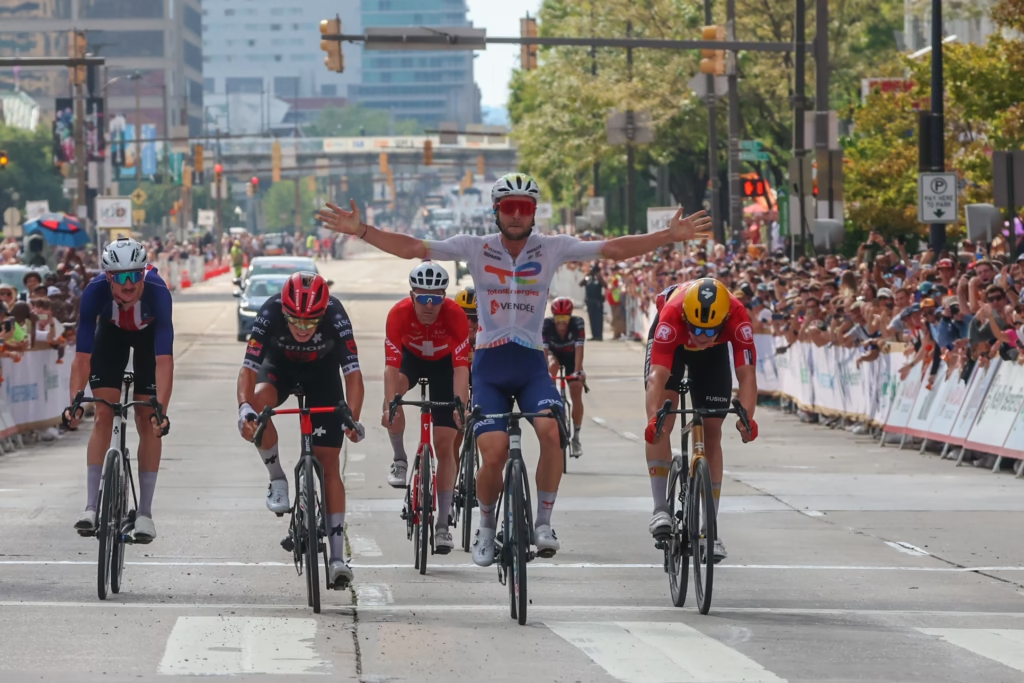
A stage hunter is a rider whose main goal is to win individual stages rather than the overall race. Stage hunters often use breakaways because they are not usually the best pure sprinter or the best overall climber.
A stage hunter studies the route and chooses specific days. They may save energy on stages that do not suit them, then attack hard when the profile is right. Hilly days, medium mountain stages and late transition stages are often ideal.
In the Tour, stage hunters are vital because they keep the race open. They are the riders who make the peloton chase, force tactical decisions and turn awkward stages into real battles.
The 2026 route should suit stage hunters because it includes several difficult stages that are not guaranteed GC days or sprint days. The Massif Central, Vosges and Jura could be especially important.
For route detail, see our Tour de France 2026 Massif Central guide and Tour de France 2026 Vosges and Jura guide.
What is a satellite rider?
A satellite rider is a teammate sent into the breakaway so they can help a team leader later in the stage. This is most common on hilly or mountain stages.
For example, a team with a yellow jersey contender may send a strong domestique into the break early. Later, if the leader attacks from the peloton and catches that teammate, the satellite rider can help with pacing, food, bottles or support on a descent or valley road.
This tactic can make a breakaway dangerous even if the rider ahead is not trying to win the stage. Rival teams have to ask whether the move is really about the stage win or part of a bigger plan.
Satellite riders are a good example of why Tour tactics can be layered. The breakaway may look like a group chasing stage glory, but one rider in that group may be there for a completely different reason.
For more on those roles, see Tour de France 2026 domestiques who could decide the race.
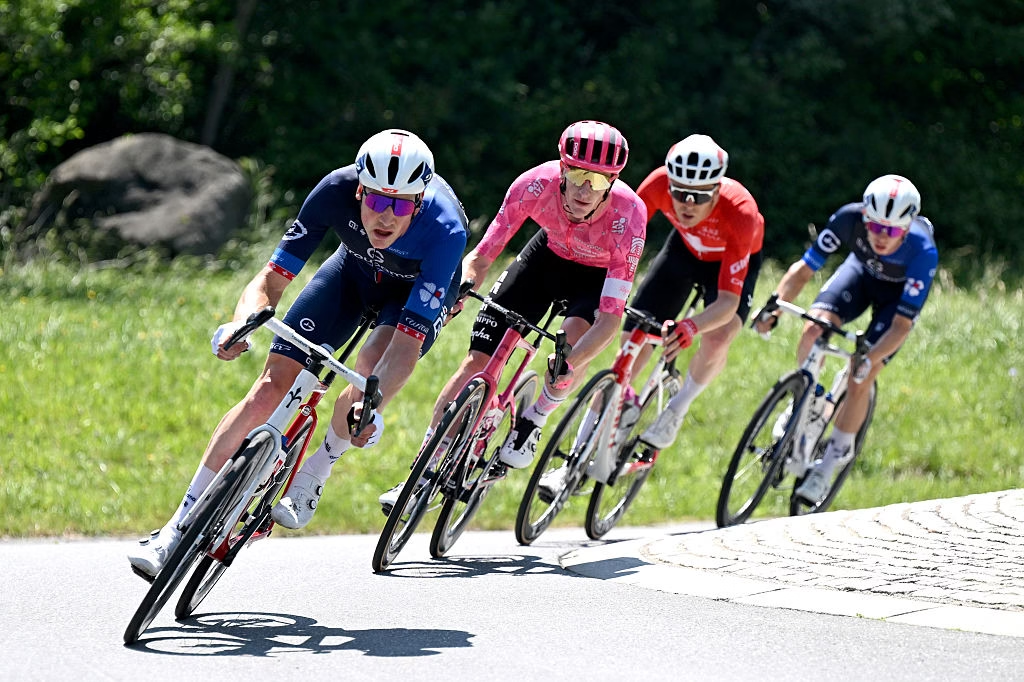 Photo Credit: Getty
What is a breakaway specialist?
A breakaway specialist is a rider who is especially good at joining the right moves, surviving long days out front and winning from small groups. They may not be the strongest rider in the race overall, but they are excellent at this specific kind of racing.
Breakaway specialists know which moves are worth following. They understand when the peloton is tired, when sprint teams are bluffing, when a climb is hard enough to split the group, and when rivals are starting to hesitate.
They also need patience. Breakaways can look impossible for most of the day. The gap may fall, the peloton may accelerate, and the front group may start arguing. A good breakaway rider keeps working until the chance is truly gone.
The Tour rewards this skill because the race is too long and too varied for every stage to be controlled. There are always days when a bold rider can change the script.
For the best examples from the 2026 startlist, see our Tour de France 2026 breakaway specialists to watch.
Why are breakaways more likely on hilly stages?
Breakaways are often more likely on hilly stages because these stages sit between sprint control and GC control.
On flat stages, sprint teams have a clear reason to chase. On the biggest mountain stages, GC teams may control the race because the yellow jersey battle matters. Hilly stages are more awkward. They may be too hard for pure sprinters, but not important enough for GC teams to chase all day.
That creates opportunity. If sprint teams are unsure, GC teams are saving energy and breakaway teams refuse to help chase, the riders up front can build a real chance.
The terrain helps too. Climbs, descents and narrow roads make it harder for the peloton to organise. A strong breakaway can split on climbs, regroup on descents and keep the chase behind under pressure.
That is why medium mountain stages and rolling transition days often produce some of the best breakaway racing in the Tour. For the 2026 route pattern, see our Tour de France 2026 route analysis.
 Photo Credit: Getty
Why are breakaways harder on flat stages?
Breakaways are harder on flat stages because the peloton has a big advantage. The bunch can ride efficiently, the sprint teams have a clear reason to chase, and the roads often make it easier to manage the gap.
If several sprint teams each put one rider on the front, they can gradually bring back a small breakaway. The riders ahead are more exposed to the wind, while the sprinters are protected in the bunch.
This is why many flat-stage breakaways are caught inside the final 10km. The peloton wants to time the catch carefully, then set up the sprint trains.
Flat breakaways can still win, but they usually need special circumstances: crosswinds, poor chase organisation, a very strong group, bad weather, crashes, or a peloton that leaves it too late.
For the 2026 sprint-stage picture, see Tour de France 2026 sprint stages ranked, Tour de France 2026 route: best days for sprinters and best lead-out riders at the Tour de France 2026.
Why do breakaways happen on mountain stages?
Mountain breakaways happen because many strong climbers are no longer fighting for the overall classification but still have the legs to win a hard stage.
If a rider has lost a lot of time overall, the GC teams may allow them into the break. That rider can then target the stage without threatening the yellow jersey.
Mountain breakaways often include climbers, polka-dot jersey contenders and stage hunters. The group may be allowed a big gap if the GC teams are saving energy for the final climb. But the breakaway is always vulnerable if the favourites attack behind.
This is what makes mountain breakaways unpredictable. The breakaway might look safe, then lose minutes quickly when the yellow jersey group accelerates. Or the GC riders might mark each other, allowing the break to fight for the stage.
For the 2026 mountain context, see Tour de France 2026 mountain stages ranked by difficulty, Tour de France 2026 climbers guide and Tour de France 2026 summit finishes guide.
 Photo Credit: Getty
How do breakaways affect the yellow jersey?
A breakaway affects the yellow jersey if it contains a rider close enough on overall time to threaten the race lead. If a dangerous GC rider gets into the break, the yellow jersey team usually has to chase.
This is why time gaps in the overall classification matter. A rider who is far behind can be allowed freedom. A rider close to the lead cannot.
Breakaways can also help GC teams indirectly. A team may send a rider up the road as a satellite rider. Another team may be forced to chase, using energy before the final climb. A leader may attack later and bridge across to teammates already ahead.
The yellow jersey battle is not only fought between the biggest favourites in the final kilometres. It can be shaped by riders placed in the breakaway hours earlier.
For more on the overall battle, see our Tour de France 2026 GC favourites ranked and Tour de France 2026 route: best days for GC attacks.
How do breakaways affect the green jersey?
Breakaways affect the green jersey because they can take points away from sprinters. Intermediate sprints usually happen during the stage, before the finish. If the breakaway reaches the sprint first, the riders ahead take the biggest available points.
That can be a problem for sprinters chasing green. They may miss out on points even if they later win the bunch sprint behind. Over three weeks, those missed points can matter.
Breakaways can also deny sprinters a stage finish. If the break survives on a flat or hilly day, the sprinters lose a chance for both a stage win and major points.
That is why green jersey contenders need strong teams. They have to manage the whole stage, not just the final sprint.
For more on the points competition, see Tour de France 2026 sprinters guide, best sprinters at the Tour de France 2026 and Mads Pedersen at the Tour de France 2026.
 Photo Credit: Getty
How do breakaways affect the polka-dot jersey?
Breakaways are central to the polka-dot jersey because mountains points are awarded at the tops of categorised climbs. Riders chasing the mountains classification often need to get into the break so they can reach those climbs ahead of the peloton.
This is especially important on stages with several climbs before the finish. A rider in the break can collect points early, even if the GC favourites catch them later.
The polka-dot jersey often rewards repeat attackers. A rider may need to join breakaways across several mountain stages, collect points, recover, then do it all again.
The complication is that summit finishes can give big points to the GC favourites. If the yellow jersey contenders dominate the hardest mountain stages, breakaway riders may need to gather points before the final climb.
That makes the mountains classification one of the most breakaway-driven competitions in the Tour. For the main contenders, see our Tour de France 2026 climbers guide and best climbers at the Tour de France 2026.
What is the combativity award?
The combativity award is given to an aggressive rider on a stage. Breakaway riders often win it because they spend hours attacking, working and shaping the race.
It is not the same as a stage win, but it matters. It gives recognition to riders who make the race more active. For teams that may not win many stages, it can still be a useful reward.
A solo rider who spends most of the day ahead, or a rider who attacks repeatedly, is often a strong candidate. The award helps explain why riders continue attacking even when the break looks unlikely to survive.
The Tour has more stories than the yellow jersey and stage wins. Combativity is one of the ways it recognises riders who animate the race.
Why do some breakaways fail?
Breakaways fail for several reasons. The most common is that the peloton times the chase well and catches them before the finish.
Sometimes the breakaway does not cooperate. If riders start missing turns too early, the group slows. If one rider is too dangerous, others may refuse to work. If the group contains a fast finisher, rivals may attack each other rather than keep riding smoothly.
Terrain can also work against the break. A flat run-in helps the peloton. A headwind hurts a small group. Wide roads make the chase easier to organise.
Fatigue is another factor. Breakaway riders spend more time in the wind. After several hours, that effort catches up with them. Even a strong group can suddenly lose time when the peloton accelerates.
A breakaway does not fail only because the riders were weak. It often fails because the bunch had more numbers, better timing and clearer motivation.
 Photo Credit: Getty
Why do some breakaways succeed?
Breakaways succeed when the riders ahead are strong enough, the terrain suits them and the peloton does not chase effectively.
A good breakaway often has the right balance. It must be strong enough to ride fast, but not so threatening that every major team chases immediately. The best break is dangerous enough to survive, but not dangerous enough to panic the peloton too early.
Timing matters too. Breakaways are more likely to succeed later in the Tour when teams are tired. They are also more likely on stages where no one team wants full responsibility for the chase.
Terrain is crucial. Rolling roads, climbs, descents, narrow lanes and technical finishes all help the break. Long, flat, straight roads usually help the peloton.
The best breakaway wins often look simple at the finish, but they are built on hours of calculation. For the 2026 stages most likely to reward that calculation, see our Tour de France 2026 breakaway stages ranked.
What does “the break has been caught” mean?
When commentators say the break has been caught, it means the peloton or a chasing group has reached the breakaway. The time gap has gone to zero, and the riders ahead are back in the bunch.
This often happens before sprint finishes. The catch might come with 20km to go, 10km to go, or inside the final kilometre. The later it happens, the more dramatic it feels.
Once caught, breakaway riders often drift backwards because they have used so much energy. They may finish in the peloton or lose time if the pace remains high.
Sometimes only part of the break is caught. One rider may attack from the break and stay ahead while the rest are brought back. That creates a final chase and can make the stage even more tense.
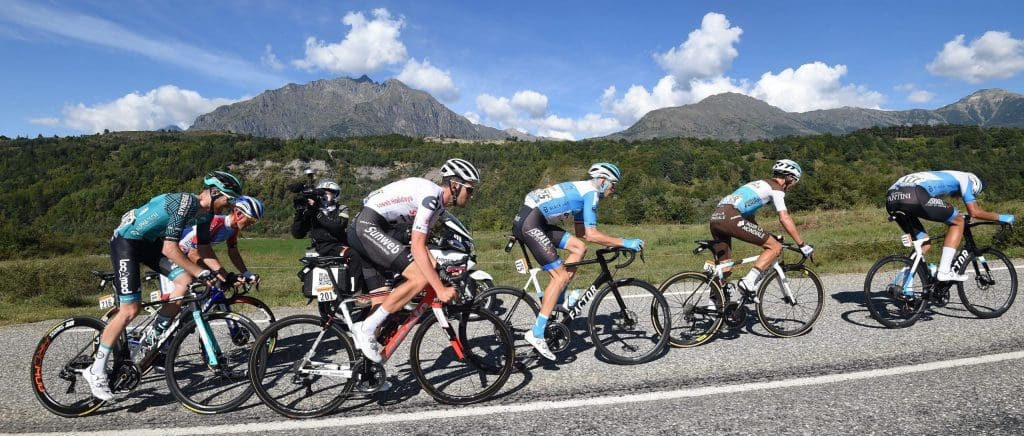
What does “the break will go all the way” mean?
When commentators say the break will go all the way, they mean the breakaway is likely to reach the finish before the peloton. At that point, the stage winner will come from the riders in front.
This changes the race immediately. The breakaway riders stop thinking only about survival and start thinking about how to beat each other.
Cooperation often gets worse. Faster riders may stop working. Climbers may attack to avoid a sprint. Teammates may use numbers. Riders start bluffing, hesitating and forcing others to chase.
This is often the best part of a breakaway stage. The peloton is no longer the main opponent. The other riders in the break are.
How do teams decide who goes in the breakaway?
Teams decide based on the stage profile, team goals and rider condition. Before a stage, teams will often identify whether it looks like a sprint day, GC day, breakaway day or mixed day.
On a likely breakaway day, the team may nominate one or two riders to try to get into the move. A rouleur may target flat or rolling terrain. A climber may target mountain stages. A punchy rider may target hilly finishes.
Teams also think about what they need later in the stage. A rider needed for sprint lead-out work may not be allowed to attack. A mountain domestique may be saved for a GC leader. A strong teammate may be sent ahead as a satellite rider.
Not every move is planned perfectly. Sometimes riders react to the race situation. But the best teams usually know who has freedom before the stage begins.
For the 2026 squad context, see Tour de France 2026 team-by-team guide, full start list for Tour de France 2026 and Tour de France 2026 domestiques who could decide the race.
What should beginners watch for in a breakaway?
If you are new to the Tour, watch three things: the gap, the terrain and the teams chasing behind.
The gap tells you whether the breakaway has a chance. The terrain tells you whether that gap is likely to hold or fall quickly. The teams chasing tell you how serious the peloton is.
Also look at who is in the break. A small group of riders far down overall on a flat stage may be allowed a few minutes and then caught. A strong group of stage hunters on rolling terrain is much more dangerous. A break containing a GC threat will probably force a chase.
Watch how the breakaway works together. If riders are rotating smoothly, they still believe. If they are missing turns, arguing or attacking each other too early, the peloton may be closing in.
The final 30km is usually the key. That is when the break either becomes doomed, survives, or turns into a tactical fight for the stage.
For more basic race language, see our French cycling terms explained.
What are the best breakaway stages in the 2026 Tour de France?
The best breakaway stages in the 2026 Tour should be the ones where the terrain is hard enough to weaken control but not so hard that the GC teams dominate completely.
Stage 9 to Ussel looks like one of the best examples. It comes before the first rest day and sits on terrain that should be difficult for sprint teams to control. That is exactly the kind of day stage hunters target.
Stage 10 to Le Lioran should also interest attackers, although the GC riders may become involved if the race is hard enough. Stage 14 to Le Markstein and Stage 15 to Plateau de Solaison could suit mountain breakaways, depending on how the yellow jersey teams race.
Later transition days may also give attackers chances if sprint teams are weakened and GC teams are saving energy for the Alps.
For a full breakdown, see Tour de France 2026 route: best days for breakaways, Tour de France 2026 breakaway stages ranked and Tour de France 2026 Massif Central guide.
Breakaway explained simply
A breakaway is when one rider or a group of riders rides ahead of the peloton. They are trying to stay away, win the stage, take points or help their team.
The peloton may let them go if they are not dangerous. The peloton may chase if sprinters, GC teams or jersey contenders need to bring them back.
Breakaways are more likely to win on hilly, rolling or mountain stages where control is harder. They are less likely to win on flat stages where sprint teams are organised.
The breakaway is one of the main reasons the Tour de France is not just a race between the biggest names. It gives more riders a chance to attack, take risks and shape the day.
For more Tour de France explainers, visit our beginner’s guide to Men’s Tour de France 2026, Tour de France 2026 full route guide and Tour de France hub.