

Stage 4 of the Tour de France 2026 gives the race a different kind of problem.
After a team time trial, a punchy Barcelona finish and the first mountain stage to Les Angles, the peloton now faces a hilly 181.9km route from Carcassonne to Foix. It is not a summit finish. It is not a pure sprint stage. It is one of those awkward Tour days that can be won by a breakaway, a classics-style attacker, or a reduced group if the sprint teams and GC teams decide to keep the race under control.
The race situation makes it even more interesting.
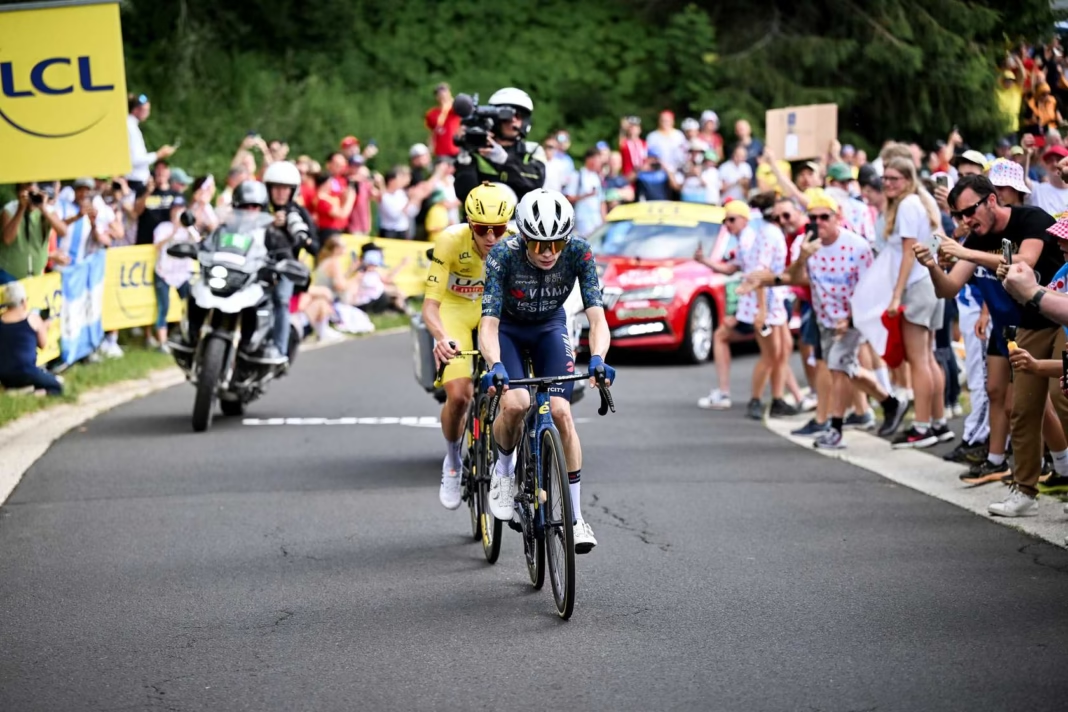
Tadej Pogačar starts stage 4 in yellow after winning stage 3 at Les Angles and moving level on time with Jonas Vingegaard, taking the race lead on countback. Vingegaard is second overall, Remco Evenepoel remains close, Isaac del Toro is still an important UAE card, and the young rider picture is already packed with names who could shape the race beyond the white jersey.
This is the first stage where UAE Team Emirates XRG have the yellow jersey to defend. That changes the tactical question. Do they control the race, or do they allow the breakaway to go and make Visma, Red Bull-Bora-hansgrohe and the sprint teams decide how much they want the day?
For wider race context, see our Tour de France 2026 full route guide, Tour de France 2026 stage 3 report and Tour de France 2026 Pyrenees guide.

Quick answer: what is stage 4?
Stage 4 of the Tour de France 2026 is a 181.9km hilly stage from Carcassonne to Foix. It includes four categorised climbs, with the category 2 Col de Coudons and category 2 Col de Montségur the most important. The final climb crests 35.2km from the finish, making this a strong breakaway or reduced-group stage rather than a nailed-on sprint.
| Detail | Stage 4 |
|---|---|
| Date | Tuesday 7 July 2026 |
| Route | Carcassonne to Foix |
| Distance | 181.9km |
| Stage type | Hilly |
| Elevation gain | 2,700m |
| Neutralised start | 13:10 local time |
| Expected finish | From around 17:23 local time |
| Key climb | Col de Montségur, 6.9km at 6.6% |
| Final categorised climb | Col de Montségur, cresting 35.2km from finish |
| Intermediate sprint | Quillan |
| Finish | Foix |
| Likely winner type | Breakaway rider, puncheur or reduced-group finisher |
What happened on stage 3?
Stage 3 changed the Tour again.
After Visma Lease a Bike took control on the opening team time trial and UAE responded through Isaac del Toro on stage 2, Pogačar delivered the first direct GC blow of the race at Les Angles.
The world champion won the stage ahead of Vingegaard, with Richard Carapaz third and Paul Seixas fourth. The result itself was close, but the details mattered on stage 2, Pogačar delivered the first direct GC blow of the race at Les Angles.
The world champion. Pogačar took 10 bonus seconds, Vingegaard took six, and the finish gap was measured at two seconds. That was enough to bring Pogačar level on time with Vingegaard and move him into yellow on countback.
That is a major psychological shift after only three stages.
Vingegaard has not cracked. He is still effectively tied on time with Pogačar, and he has looked calm through a very aggressive opening block. But the jersey has changed shoulders. UAE have now won stages 2 and 3, taken yellow, controlled finales on two very different days, and shown that Del Toro is more than a support rider.
Stage 4 now begins with UAE defending, not chasing.
For the build-up to that first mountain test, see our Tour de France 2026 stage 3 preview and Tour de France 2026 stage 3 live viewing and start time update.
Current GC picture before stage 4
The headline GC picture is clear.
Pogačar and Vingegaard are level on overall time, with Pogačar in yellow on countback. Evenepoel remains close after finishing in the front group at Les Angles, while Del Toro, Ayuso, Seixas and several younger GC contenders are still prominent.
That gives stage 4 a slightly strange feel. It is not hard enough to guarantee GC gaps, but it is difficult enough that no leader can afford to switch off. The last categorised climb comes far enough from the finish that a major GC attack is unlikely, but the road to Foix still gives teams room to isolate, pressure or test each other.
The race is balanced. That often makes hilly transition stages more dangerous, not less.
For newer viewers, our guide to how the Tour de France general classification works explains why countback, bonus seconds and small gaps can matter so much in a tight opening week. Our Tour de France 2026 contenders preview and Tour de France 2026 GC favourites ranked give the wider hierarchy behind the current standings.
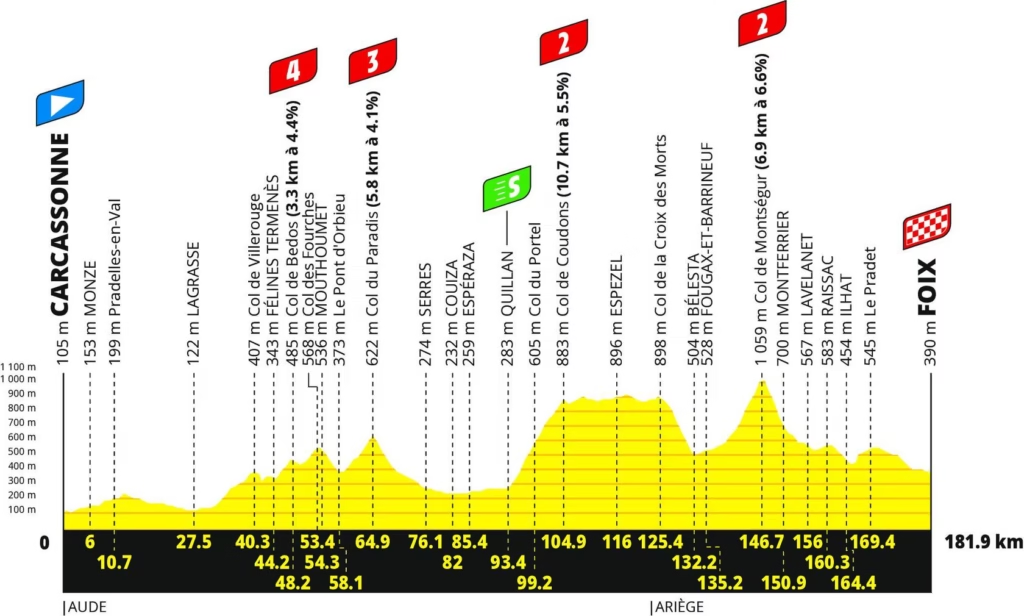
The route: Carcassonne to Foix
Stage 4 starts in Carcassonne and finishes in Foix, keeping the race in southern France after the Catalan Grand Départ and the first Pyrenean hit at Les Angles.
The profile is jagged from early on. The first 65km contain the Col de Bedos and Col du Paradis, neither of which is likely to decide the stage, but both make the start harder to control. That matters because the breakaway fight could be fierce.
The middle of the stage takes the race through Quillan for the intermediate sprint before the day’s two main climbs: the Col de Coudons and the Col de Montségur.
The Col de Coudons is 10.8km at 5.5%, a long enough category 2 climb to remove pure sprinters and test any teams still trying to control the stage. The Col de Montségur is shorter but steeper, at 6.9km at 6.6%, and crests with 35.2km still to race.
That final climb is the tactical centre of the stage. It is far enough out to make a solo move difficult, but close enough to the finish that a strong group can go clear and survive. After Montségur, the road heads towards Foix, giving chasers time to organise if they still have numbers.
This is not one of the race’s most brutal climbing days, but it sits firmly inside the awkward opening block. The broader mountain context is covered in our Tour de France 2026 mountain stages ranked by difficulty guide.
Stage 4 climbs
| Climb | Position | Length | Gradient | Category |
|---|---|---|---|---|
| Col de Bedos | Km 48.2 | 3.4km | 4.4% | Category 4 |
| Col du Paradis | Km 64.9 | 5.9km | 4.1% | Category 3 |
| Col de Coudons | Km 104.9 | 10.8km | 5.5% | Category 2 |
| Col de Montségur | Km 146.7 | 6.9km | 6.6% | Category 2 |
There are 13 mountains classification points available across the stage. That makes it important for Alex Baudin, who took the polka-dot jersey after his long attack on stage 3, and for any breakaway riders who want to move into the mountains classification battle before the bigger Pyrenean stages.
For the wider polka-dot picture, see our Tour de France 2026 climbers guide and best climbers at the Tour de France 2026.
Why the Col de Montségur matters
The Col de Montségur is the key feature of stage 4.
At 6.9km and 6.6%, it is hard enough to split the race if climbed quickly. It is also the final categorised climb of the day, cresting with 35.2km remaining. That means it is the obvious launchpad for a decisive move.
A breakaway group could reduce itself there. A punchy climber could attack over the top and try to hold the gap. A team with numbers could force a split and then drive towards Foix. A GC team could also use it to test rivals without fully committing to a long-range battle.
The climb is probably too far from the finish for Pogačar and Vingegaard to launch a full duel unless something unusual happens. But it is close enough to make positioning vital. A badly placed GC rider, a mechanical problem or a small split over the top could still create stress.
The Tour has already shown in the first three stages that small gaps matter. Our explainer on how bonus seconds work at the Tour de France gives useful context for why the opening week has already changed so quickly.
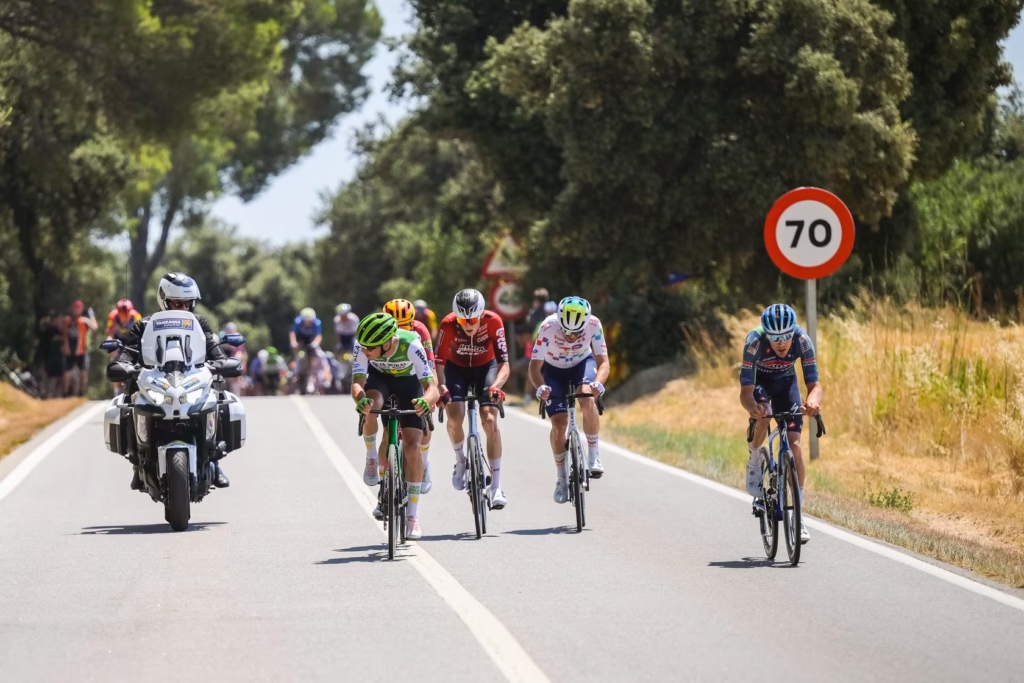 Photo Credit: A.S.O./Charly López
Breakaway or reduced sprint?
Stage 4 has breakaway written all over it, but the finish points complicate that.
The stage finish in Foix offers 50 points in the green jersey competition, which means it is a high-value points finish. That could tempt teams with stronger sprinters who believe their riders can survive the climbs.
The problem is the route. The Col de Coudons and Col de Montségur are hard enough to drop most pure sprinters if the pace is high. A rider like Mads Pedersen may be interested if his team believes he can survive, but this is unlikely to be a straightforward day for the fastest flat-stage riders.
That leaves three realistic scenarios.
| Scenario | How it happens |
|---|---|
| Breakaway win | UAE let the move go, Visma do not chase, and sprint teams decide the route is too hard |
| Reduced group sprint | Teams with all-round fast men control the gap and bring 30-60 riders to Foix |
| Late attack | A strong rider or small group goes clear over Montségur and holds on |
The most likely outcome is the breakaway, partly because the race has been so intense already. UAE may not want to spend the first full day in yellow chasing a hilly stage, and Visma have no obvious reason to help them unless a dangerous GC rider is up the road.
This is exactly the kind of day discussed in our Tour de France 2026 route: best days for breakaways and Tour de France 2026 stage hunters to watch guides.
How UAE might defend yellow
UAE’s problem is that they have been too good too early.
Pogačar is in yellow, Del Toro has already won a stage and remains close overall, and the team has shown strength on both Montjuïc and Les Angles. That gives them control, but it also gives them responsibility.
On stage 4, they do not need to win. In fact, letting the breakaway take the day may be the cleanest option. It removes bonus seconds from the GC contenders, reduces pressure in the finale and avoids asking the team to chase across 181.9km of uneven roads.
The danger is the composition of the break. UAE cannot allow a strong GC outsider or a rider close enough to threaten the jersey to go too far clear. That means the first hour could be tense. If the right break goes, UAE can relax. If the wrong break goes, they may have to work.
This is where having Del Toro high overall is both useful and complicated. He gives UAE another card, but he also makes other teams wary of letting UAE race freely.
For more on UAE’s wider race structure, see our Tour de France 2026 team-by-team guide and Tadej Pogačar Tour de France 2026 preview.
What does Visma need from stage 4?
Visma need a calmer day.
Vingegaard is no longer in yellow, but he is level on time with Pogačar. That is not a bad place to be after three stages, especially given that the last two finishes were better suited to Pogačar’s punch.
Stage 4 is not an obvious Vingegaard attack day. The climbs are not long enough or close enough to the finish to favour a full mountain move, and the run-in to Foix gives UAE and others time to chase.
Visma’s best outcome may be simple: no drama, no time lost, no unnecessary work. If a safe breakaway wins and the GC riders finish together, Vingegaard can move towards the bigger mountain days still locked level with Pogačar.
The risk is that UAE or another team turns the Col de Montségur into a stress test. Vingegaard does not need to gain time, but he cannot afford to be isolated, caught behind or drawn into a nervous chase.
Vingegaard’s wider race is covered in our Jonas Vingegaard Tour de France 2026 guide, while the importance of his support riders is explained in our Matteo Jorgenson Tour de France 2026 preview.
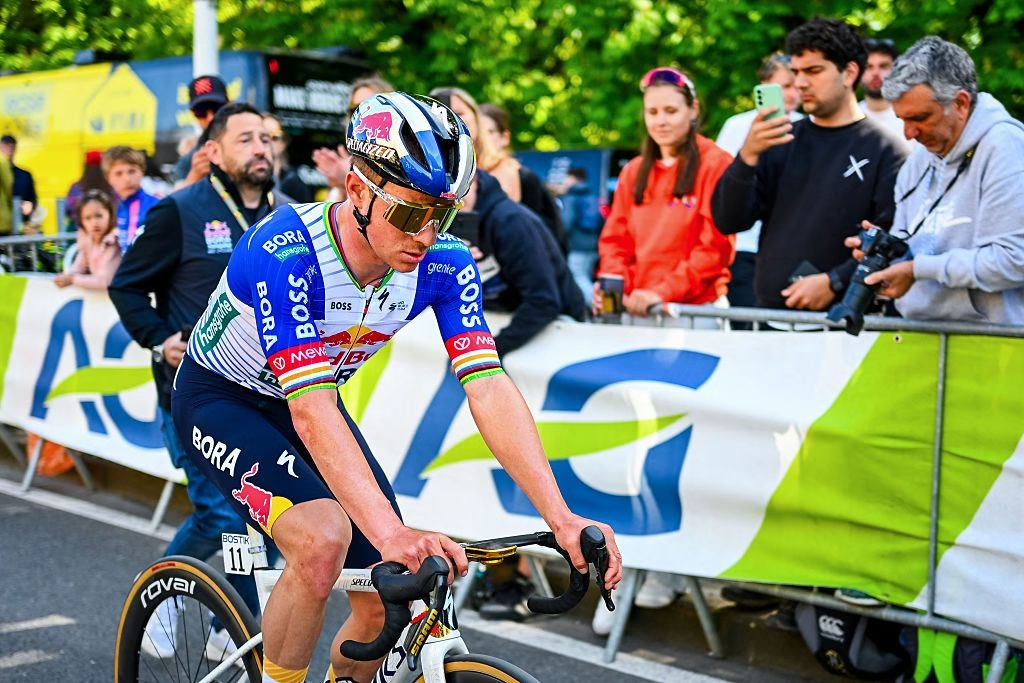
What about Evenepoel?
Evenepoel starts stage 4 still close enough to matter, but not yet close enough to dictate the race.
He limited the damage on stage 3 and finished in the front group, which was important. The first mountain stage could have exposed him if he had been below his best. Instead, he stayed near the main names and kept his Tour intact.
Stage 4 may suit him in a different way.
The route is rolling, technical and not too mountainous. If the race becomes tactical after Montségur, Evenepoel’s ability to attack on flatter roads and sustain speed could make him dangerous. The problem is that he would be heavily marked, and Red Bull-Bora-hansgrohe may prefer to wait for a clearer GC opportunity.
Still, this is a stage where Evenepoel must stay alert. A late split or a sharp move after Montségur would not be impossible.
His broader Tour questions are covered in our Remco Evenepoel Tour de France 2026 preview.
The green jersey angle
Stage 4 could matter more for green than it first appears.
The finish in Foix offers 50 points to the winner, which is the biggest standard haul available in the Tour points classification. The intermediate sprint in Quillan also offers 25 points.
That creates a genuine incentive for the points contenders. But the route makes it difficult. The strongest sprinters may struggle to survive the Col de Coudons and Col de Montségur if the pace is high, especially after the heat and mountains of stage 3.
The day therefore suits the all-round fast men more than the pure sprinters. Pedersen is the obvious name in that category. Biniam Girmay might also be interested if he climbs well. Van der Poel could be dangerous if he wants a stage and finds the right move. Michael Matthews is another rider who fits the profile of a difficult, reduced-finish day.
For the pure sprinters, the question is survival. If they are dropped on Montségur, the green jersey points go elsewhere.
For the wider points picture, see our Tour de France 2026 sprinters guide, best sprinters at the Tour de France 2026 and Tour de France green jersey guide. Our Mads Pedersen Tour de France 2026 guide also explains why these harder points days may be central to his race.
The polka-dot jersey angle
Alex Baudin’s stage 3 ride changed the mountains classification, but stage 4 gives others a quick chance to respond.
There are points on four climbs, with the Col de Coudons and Col de Montségur each offering five points to the first rider over the top. That makes the breakaway very attractive for riders chasing the polka-dot jersey.
The early climbs are not huge, but they can help shape the fight. If a rider already close in the mountains classification gets into the move, they could take control before the deeper Pyrenean stages.
This is the kind of day where the polka-dot jersey battle may be more active than the yellow jersey battle.
For newer fans, our Tour de France 2026 jerseys explained guide explains how the mountains classification fits alongside yellow, green and white.
 Photo Credit: Getty
Riders to watch
Tadej Pogačar
Pogačar starts in yellow after winning at Les Angles. He does not need to attack, but he rarely passes up a chance if the race opens. The finish is probably not hard enough for him to make this a priority, but UAE’s strength means he must always be watched.
Jonas Vingegaard
Vingegaard is level on time with Pogačar and has every reason to ride conservatively. Stage 4 is about staying safe, staying close and waiting for better terrain.
Remco Evenepoel
Evenepoel’s ability to attack over rolling terrain makes him interesting if the GC group becomes tactical. He may not want to spend energy, but this stage has enough road after the final climb for his engine to matter.
Mads Pedersen
Pedersen is one of the most logical stage favourites if the sprint teams believe the route can be controlled. He can climb better than many pure sprinters and has the finishing speed to win in Foix.
Mathieu van der Poel
Van der Poel is dangerous from almost any medium-mountain or hilly stage. He could go in the break, attack over Montségur or sprint from a reduced group if the race comes back together. He is also one of the key names in our Tour de France 2026 breakaway specialists to watch feature.
Biniam Girmay
Girmay has the right blend of climbing resistance and finishing speed for this kind of stage. The climbs may still be a serious problem, but if he survives, he becomes a major threat.
Michael Matthews
Matthews has built a career around awkward finishes and hilly stages that are too hard for pure sprinters. Foix could suit him if Jayco AlUla commit to controlling the race.
Richard Carapaz
Carapaz was third on stage 3 and looks sharp. He may not get freedom if he remains too close overall, but he is exactly the kind of rider who could turn Montségur into a launching point.
Tom Pidcock
Pidcock is one of the more intriguing names for a hilly stage with a descent and rolling finale. If he is given freedom, he has the punch and handling to make a late move count. His wider race is covered in our Tom Pidcock Tour de France 2026 preview and British riders at the 2026 Tour de France guide.
Stage 4 tactical forecast
The first hour should be fast and messy.
The early climbs come soon enough to make the breakaway fight difficult. Teams with stage hunters will want representation, riders chasing mountains points will try to get up the road, and UAE will need to judge which moves are safe.
Once the break is formed, the race may settle until the Col de Coudons. That is where the peloton can begin to make decisions. If sprint teams are still chasing, they need to keep the gap manageable there. If they have given up, the breakaway may already be racing for the stage.
Montségur is the key point. Expect attacks from the break there, possible pressure behind, and a tense descent and run towards Foix.
If a strong group crests Montségur with a gap, it can win. If the peloton crests together with enough domestiques still present, a reduced sprint becomes more likely.
For more on how these races within the race develop, see our explainer on what a breakaway is in the Tour de France and guide to how Tour de France teams work.
-
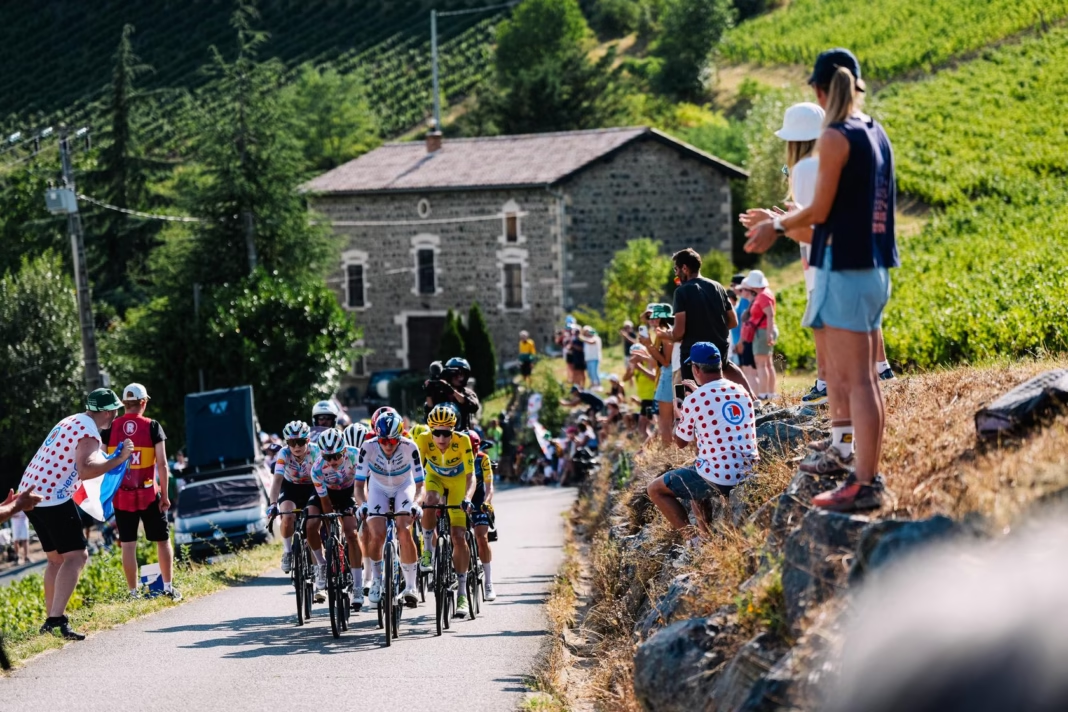
 Photo Credit: A.S.O./Billy Ceusters
Prediction
Stage 4 looks more like a breakaway day than a GC day.
The race has already been hard, UAE have yellow, Visma have little reason to chase, and the terrain is difficult enough to discourage pure sprint teams from fully committing. That combination usually gives attackers hope.
However, the 50 points at the finish could change the calculation. If Lidl-Trek, Intermarché, Alpecin-Premier Tech, Jayco AlUla or another team believes their fast finisher can survive the climbs, they may keep the break closer than expected.
The final result probably depends on how hard the Col de Coudons is raced. If the break still has a healthy lead there, the stage is gone. If the gap is under two minutes by Montségur, the reduced-group finish becomes much more realistic.
One-star contenders
Biniam Girmay, Michael Matthews, Richard Carapaz, Tom Pidcock
Two-star contenders
Mathieu van der Poel, Remco Evenepoel, Tadej Pogačar, Mads Pedersen
Three-star contenders
A strong breakaway climber-puncheur, Mads Pedersen, Mathieu van der Poel
Final word
Stage 4 is not the hardest stage of the 2026 Tour de France, but it could be one of the most awkward so far.
Pogačar starts in yellow, Vingegaard is level on time, UAE have momentum, and the race has already been more aggressive than many opening weeks. The route to Foix gives teams enough climbing to attack, enough descending to chase, and enough points at the finish to tempt the all-round fast men.
That makes it difficult to control and difficult to predict.
The Col de Coudons should reveal whether the sprint teams still believe. The Col de Montségur should reveal whether the breakaway has the legs. The run to Foix should decide whether stage 4 becomes an attacker’s reward, a reduced sprint, or another day where the GC favourites cannot resist testing each other.
Aftr three explosive stages, the Tour probably deserves a quieter day.
Stage 4 may not give it one.

