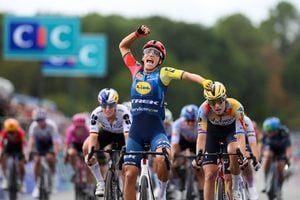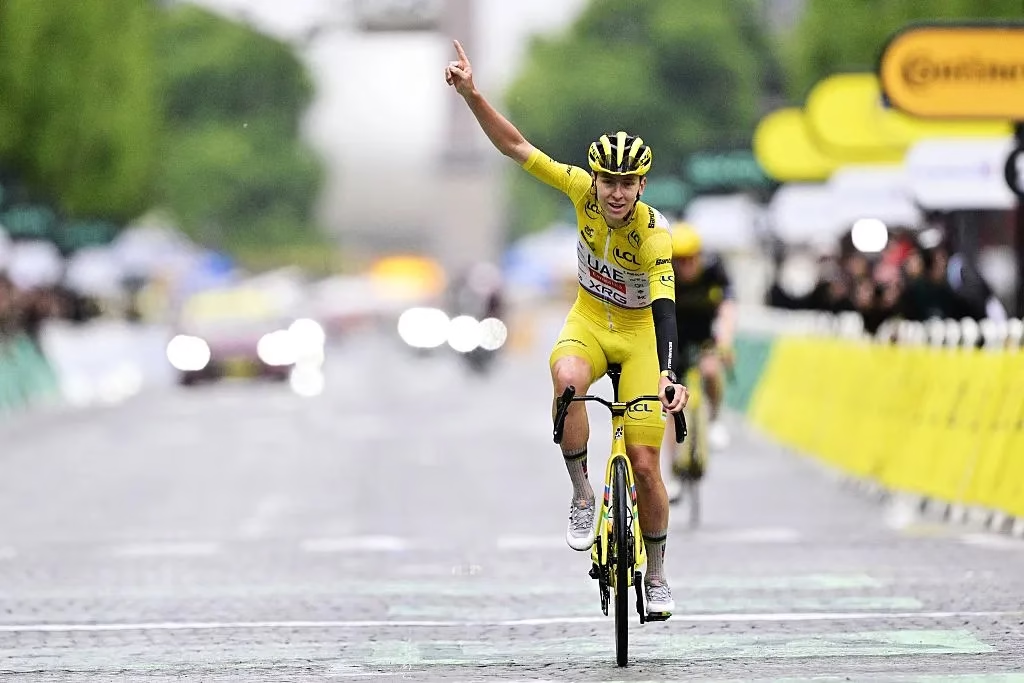
The Tour de France 2026 starts with a familiar question but a very different route shape: can anyone stop Tadej Pogačar from taking another yellow jersey?
The defending champion enters the race as the clear rider to beat, with Jonas Vingegaard again the most obvious challenger and Remco Evenepoel giving the race a third elite reference point. Behind them, Juan Ayuso, Isaac del Toro, Florian Lipowitz, Carlos Rodríguez, Matteo Jorgenson, Ben O’Connor, Richard Carapaz, Antonio Tiberi and others all have different routes towards the podium, stage wins or a top-five finish.
This is not a simple climbers’ Tour, even if the final week is built around the Alps. The race opens with a team time-trial in Barcelona, includes an individual time-trial from Évian-les-Bains to Thonon-les-Bains, and then stacks up climbing pressure through the Pyrenees, Massif Central, Vosges, Jura and Alps. The back-to-back Alpe d’Huez finishes on stages 19 and 20 give the race a final-week shape that should prevent early control from becoming too comfortable.
That makes the 2026 contenders list more layered than a straight ranking. Pogačar and Vingegaard remain the two riders with the clearest Tour-winning records. Evenepoel has the time-trial strength and team support to make the route dangerous. Ayuso and Del Toro give UAE a second and third card. Lipowitz and Rodríguez look like podium outsiders. Jorgenson, Carapaz and O’Connor can shift the race tactically if the favourites let the door open.
For the full race structure, see our Tour de France 2026 full route guide, Tour de France 2026 route analysis and Tour de France 2026 GC favourites ranked.
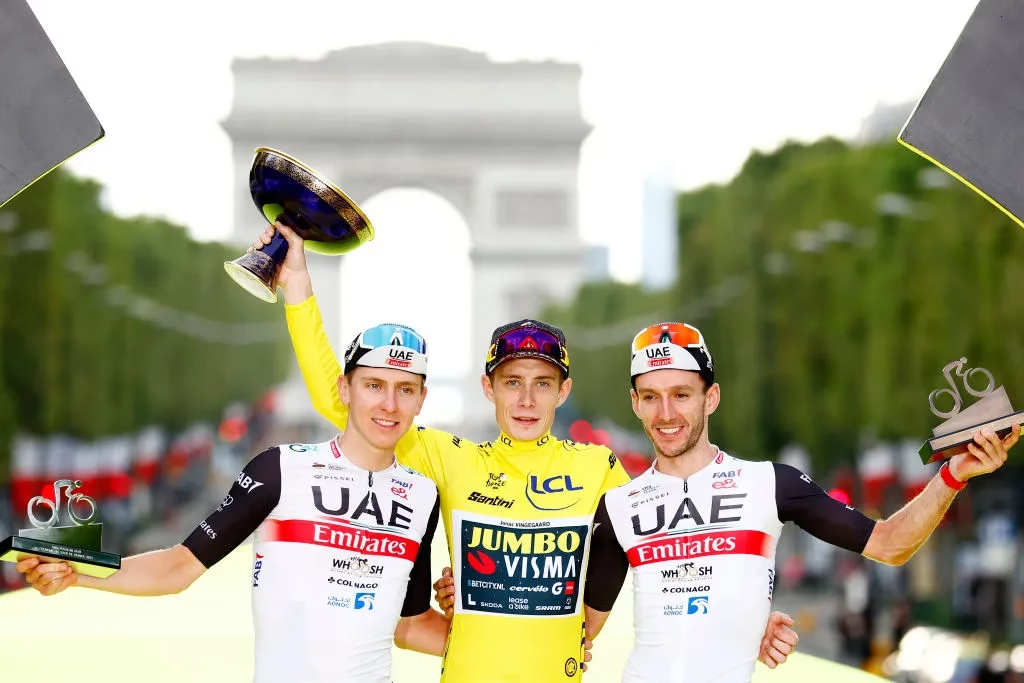
Tour de France 2026 contenders ranked
| Rank | Rider | Team | Main route fit | Biggest question |
|---|---|---|---|---|
| 1 | Tadej Pogačar | UAE Team Emirates-XRG | Explosive climbs, time trials, bonus seconds, repeated mountain days | Can he manage the strongest rival teams without over-racing? |
| 2 | Jonas Vingegaard | Team Visma | Lease a Bike | Long climbs, final-week fatigue, Alpe d’Huez block |
| 3 | Remco Evenepoel | Red Bull-BORA-hansgrohe | Time trials, controlled climbing, strong team depth | Can he limit losses on the hardest mountain stages? |
| 4 | Juan Ayuso | Lidl-Trek | Climbing, time-trialling, podium range | Is he riding for leadership or tactical pressure? |
| 5 | Isaac del Toro | UAE Team Emirates-XRG | Climbing support, youth, tactical freedom | How protected will he be behind Pogačar? |
| 6 | Florian Lipowitz | Red Bull-BORA-hansgrohe | Climbing depth, high-mountain support, podium outsider | Is he a leader, co-leader or Evenepoel’s mountain shield? |
| 7 | Carlos Rodríguez | Netcompany INEOS | Consistency, climbing, third-week resilience | Does Ineos have enough firepower around him? |
| 8 | Matteo Jorgenson | Team Visma | Lease a Bike | Versatility, time-trial ability, tactical support |
| 9 | Ben O’Connor | Team Jayco-AlUla | Long climbs, attritional days, steady GC riding | Can he avoid one damaging day? |
| 10 | Richard Carapaz | EF Education-EasyPost | Attacking mountains, breakaways, chaotic stages | Is GC realistic, or is stage hunting the better target? |
| 11 | Antonio Tiberi | Bahrain Victorious | Climbing, time trials, top-10 consistency | Can he convert promise into Tour authority? |
| 12 | Cian Uijtdebroeks | Movistar Team | Long-term GC upside, climbing base | Is this Tour too deep for a podium challenge? |
This ranking is built around realistic Tour-winning or podium chances, not just stage-winning potential. Riders such as Tom Pidcock, Lenny Martinez, Kévin Vauquelin, Paul Seixas, Mattias Skjelmose, Thymen Arensman, Lennert Van Eetvelt and Michael Storer may all shape the race, but their clearest route may be stage wins, support roles or top-10 contention rather than overall victory.
For the wider team picture, see our Tour de France 2026 team-by-team guide, full start list for Tour de France 2026 and Tour de France 2026 dark horses for the general classification.
 Photo Credit: Getty
1. Tadej Pogačar
Tadej Pogačar starts the 2026 Tour de France as the clear favourite. That does not mean the race is already his, but it does mean every other contender is being measured against him.
The route suits him in several ways. The opening team time-trial should be a strong day for UAE Team Emirates-XRG, with Brandon McNulty, Nils Politt, Tim Wellens, Adam Yates, Isaac del Toro and Felix Großschartner all giving the squad power and depth. The individual time-trial later in the race should also work for Pogačar because he can combine aerodynamic speed with climbing strength.
The mountain profile is even more important. Pogačar does not need one specific type of climb. He can attack on steep ramps, long Alpine passes, shorter explosive finishes and attritional mountain stages. The 2026 route gives him several different ways to create gaps, from Gavarnie-Gèdre in the Pyrenees to Orcières-Merlette and Alpe d’Huez in the Alps.
His biggest strength is that he can win the race in more ways than anyone else. He can take time in the TTT, gain seconds in the individual time-trial, attack on summit finishes, sprint for bonus seconds, and put pressure on rivals even on stages that do not look decisive at first glance.
The question is whether he can manage the race calmly. Pogačar’s aggression is one of his biggest assets, but the 2026 route is long enough and back-loaded enough that he may not need to attack every opportunity. If UAE start strongly in Barcelona and he gains time before the Alps, the smartest version of Pogačar may be the one who waits.
For a deeper breakdown, see Tadej Pogačar at the Tour de France 2026, Tour de France 2026 route: best days for GC attacks and Tour de France 2026 summit finishes guide.
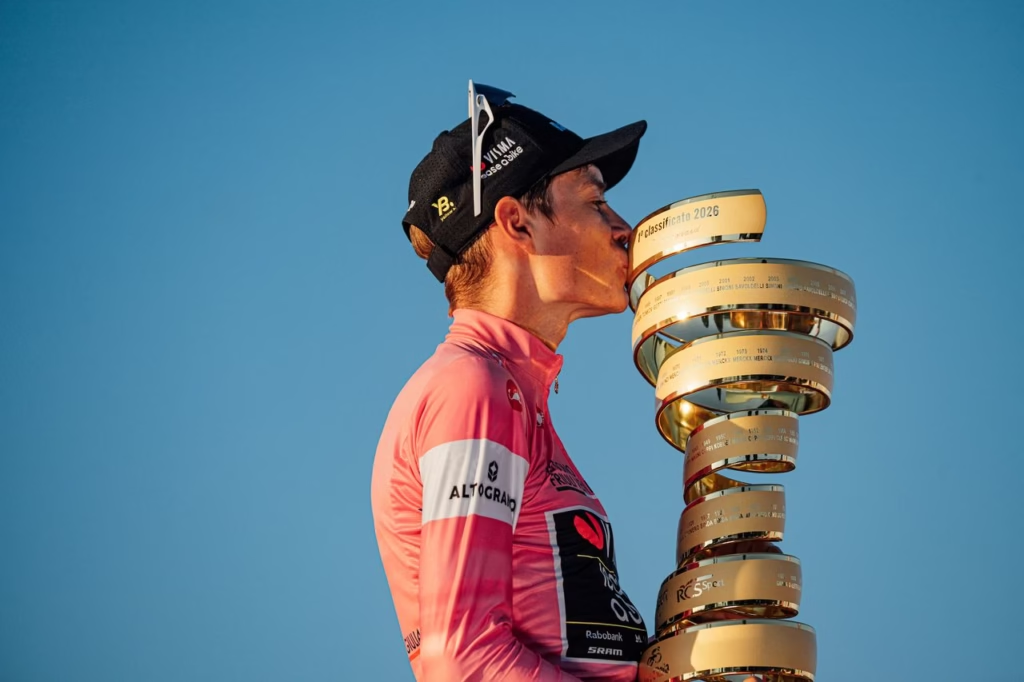 Photo Credit: Getty
2. Jonas Vingegaard
Jonas Vingegaard remains the most obvious rider who can beat Pogačar. He has already done it twice, and his best Tour performances have come when the race becomes brutally selective in the high mountains.
That is why the 2026 route keeps him firmly in the picture. The final week looks well suited to Vingegaard: Orcières-Merlette, Alpe d’Huez from Gap, then the queen stage over the Croix de Fer, Télégraphe, Galibier, Sarenne and Alpe d’Huez again. If he arrives in range before that block, he will have terrain where his endurance, climbing rhythm and recovery can matter.
Visma | Lease a Bike also have a team that can make the race difficult. Edoardo Affini and Victor Campenaerts can help in the opening team time-trial. Sepp Kuss, Matteo Jorgenson, Bruno Armirail and Davide Piganzoli give mountain support. Per Strand Hagenes adds another layer of all-round work. It is a squad that can protect Vingegaard early and then shape the race later.
The danger is the first half of the Tour. Pogačar may be able to take time in Barcelona, through bonus seconds, and on the earlier summit finishes. Evenepoel may also gain in the stage 16 time-trial. Vingegaard cannot simply wait for stage 20 if he is already too far behind.
His Tour-winning path is still clear. He needs to stay close through the opening week, avoid meaningful time losses in both time-trial disciplines, and make the final Alpine block as hard as possible. If the Tour becomes a pure endurance fight across repeated mountain days, Vingegaard’s chances rise.
For more on his route fit, see Jonas Vingegaard at the Tour de France 2026, Tour de France 2026 Alps guide and Tour de France 2026 queen stage guide.
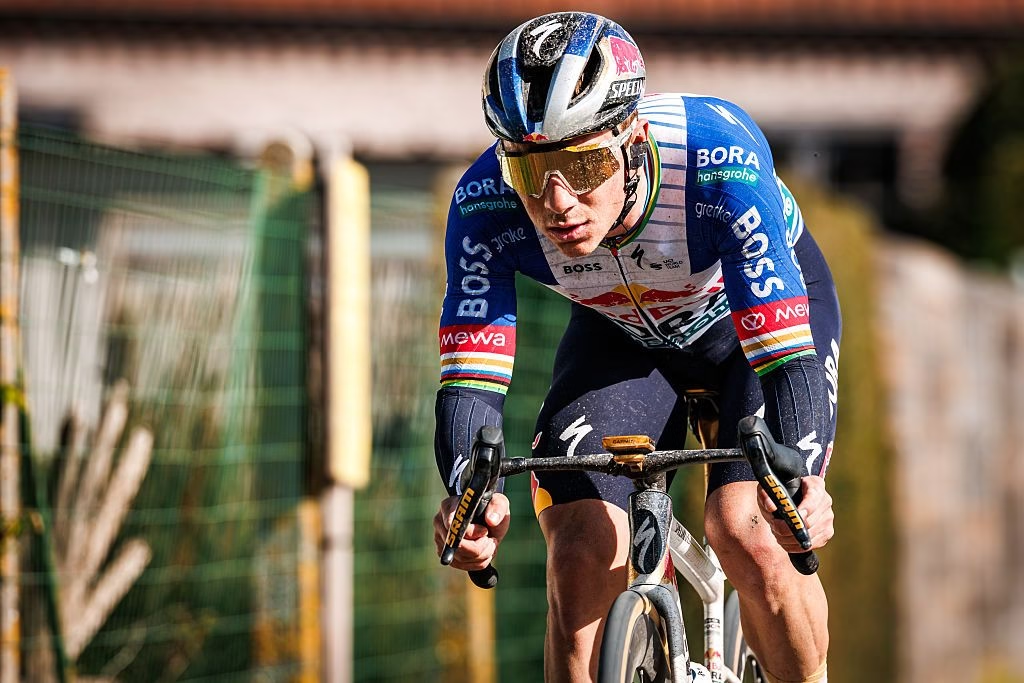 Photo Credit: Getty
3. Remco Evenepoel
Remco Evenepoel is the rider who gives the 2026 Tour its third major storyline. He is not simply a podium outsider. On this route, with this team, he has a genuine route towards yellow if the race breaks in the right way.
The time trials are the obvious reason. The opening team time-trial should suit Red Bull-BORA-hansgrohe, especially with Mattia Cattaneo, Jan Tratnik and Tim van Dijke in support. The stage 16 individual time-trial from Évian-les-Bains to Thonon-les-Bains should be one of Evenepoel’s best opportunities of the entire race. If he is within reach before then, he can put pressure on both Pogačar and Vingegaard.
The challenge is the mountains. Evenepoel has improved as a Grand Tour climber, but the Tour de France is the hardest test because the level of the top two is so high. He cannot afford a single mountain collapse. Stage 20, in particular, looks like the kind of day that could decide whether he is fighting for yellow or defending a podium place.
Red Bull-BORA-hansgrohe may have the tactical depth to help him. Florian Lipowitz and Jai Hindley give climbing support. Maxim Van Gils adds punch and versatility. The big question is how clearly the team’s hierarchy is set. If Evenepoel is the protected leader and Lipowitz is used as a high-mountain shield, the structure makes sense. If the team carries too many ambitions, it could become complicated.
Evenepoel’s best Tour scenario is this: gain early time, win or dominate the individual time-trial, climb within himself, and force Pogačar and Vingegaard to chase him rather than the other way around. He may still need one mountain breakthrough to win the Tour, but the route gives him enough tools to make that possible.
For more, see Remco Evenepoel at the Tour de France 2026, best time-triallists at the Tour de France 2026 and how the Stage 1 team time-trial could change the Tour de France 2026.
4. Juan Ayuso
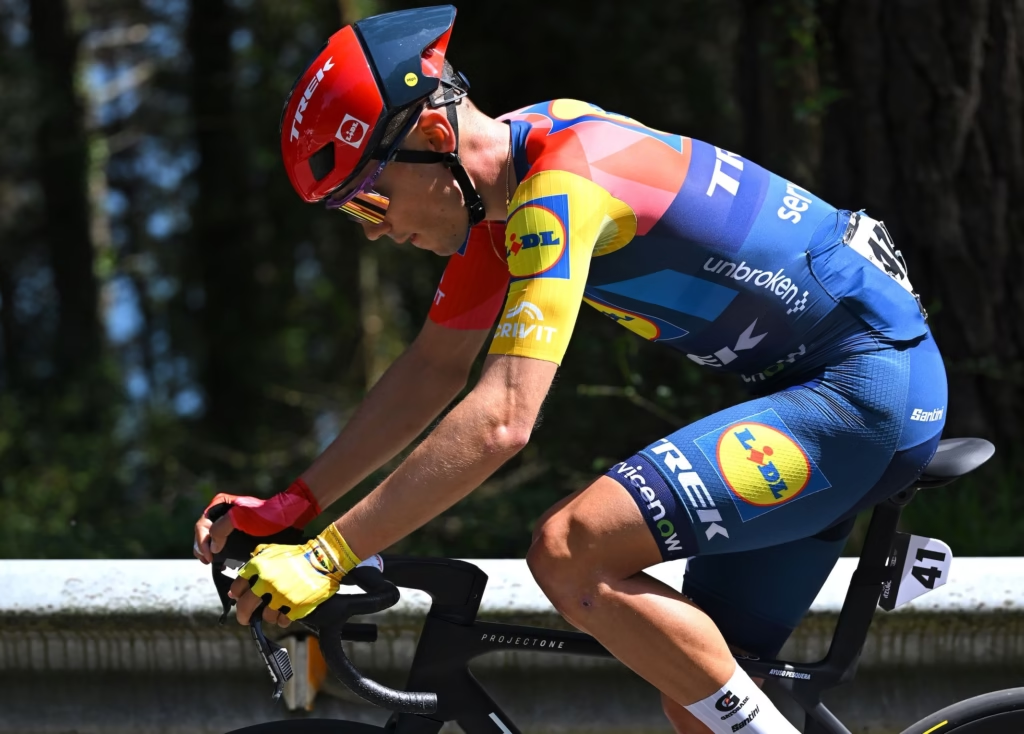
Juan Ayuso is one of the most interesting contenders on the startlist because his ceiling is high, his skill set is broad, and his tactical role could shape more than just his own race.
At Lidl-Trek, Ayuso has a strong squad around him. Mads Pedersen, Quinn Simmons, Toms Skujiņš, Mathias Vacek, Mattias Skjelmose, Derek Gee-West and Carlos Verona give the team a serious mix of power, climbing support and stage-winning range. That matters because Ayuso cannot afford to be isolated too early if he wants to challenge for the podium.
The route suits him in theory. He can climb, time-trial and handle hard stages. He should not fear the stage 16 individual time-trial, and he has the acceleration to make selective mountain finishes count. The question is whether he can turn that into a clean three-week Tour performance against Pogačar, Vingegaard and Evenepoel.
Ayuso’s best chance may come if the big three mark each other too closely. If Pogačar and Vingegaard are locked into their own battle, and Evenepoel is managing his effort, Ayuso could use intermediate mountain stages to gain time or force reactions. He does not need to be the outright strongest climber to reach the podium. He needs to be consistent, sharp and tactically brave.
There is also a wider team factor. Lidl-Trek have Pedersen for stage wins and possibly green jersey ambitions, which means their Tour may not be built only around Ayuso. That can be a strength if it gives the team options, but it can also divide resources.
Ayuso is not the safest podium pick, but he is one of the few riders outside the top three with enough all-round quality to make the race uncomfortable for them.
For his wider GC case, see Juan Ayuso at the Tour de France 2026, Mads Pedersen at the Tour de France 2026 and Tour de France 2026 team-by-team guide.
5. Isaac del Toro
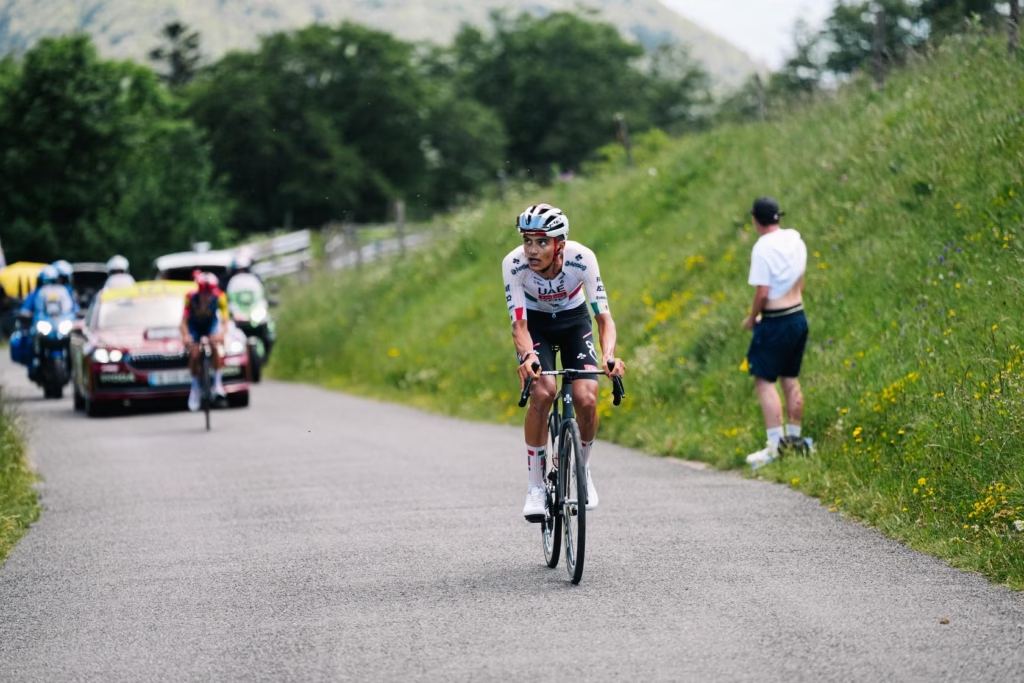
Isaac del Toro is unlikely to start the Tour as UAE’s equal leader, but he may still be one of the most important GC riders in the race.
His role depends on how UAE choose to use him. With Pogačar as the defending champion and Adam Yates also in the squad, Del Toro could be a climbing domestique, a protected secondary option, or a tactical card used to force Visma and Red Bull-BORA-hansgrohe into difficult decisions. That flexibility is valuable.
The challenge is freedom. Del Toro may have the talent to target a high overall finish, but UAE’s priority will be Pogačar. If the Slovenian is in yellow or close to it, Del Toro’s own GC ambitions may be limited by team duty. If the race becomes chaotic, though, he could become a major asset.
His route fit is strong. He should cope well with repeated climbing days, and the Alpine block gives him terrain where he can stay deep into the race. The time trials are more of a question, especially in comparison with Evenepoel, Pogačar and Ayuso, but his climbing may offset that.
Del Toro’s place this high is not based only on individual podium probability. It is based on race influence. If he is sent up the road, rivals have to chase. If he sits with Pogačar, UAE gain another rider late in the mountains. If he is protected, he becomes a top-five contender in his own right.
In a race where team depth will matter from Barcelona to Alpe d’Huez, Del Toro could be one of the riders who quietly changes the entire tactical balance.
For the wider UAE structure, see our Tour de France 2026 team-by-team guide, what is a domestique at the Tour de France? and Tour de France 2026 domestiques who could decide the race.
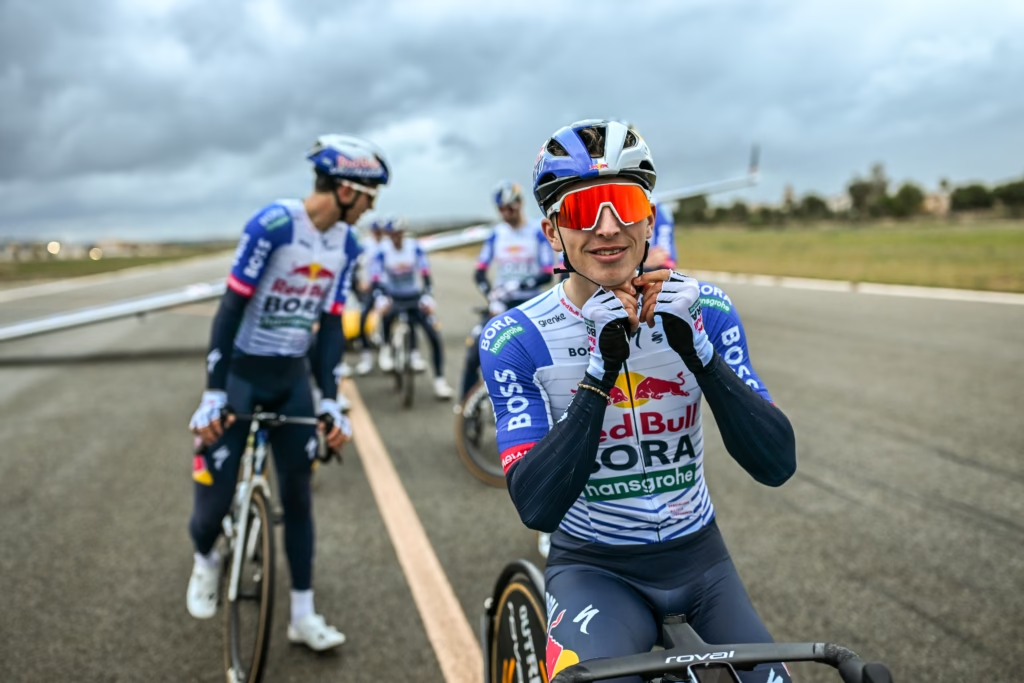 Photo Credit: Predrag Vuckovic
6. Florian Lipowitz
Florian Lipowitz is one of the strongest podium outsiders in the race, though his final ceiling depends heavily on Red Bull-BORA-hansgrohe’s hierarchy.
If he starts fully behind Evenepoel, Lipowitz becomes one of the most important climbing domestiques in the Tour. If he is protected, or if Evenepoel struggles in the mountains, he could become a top-five contender. That dual possibility makes him difficult to rank but hard to ignore.
The 2026 route suits a rider with his profile. The opening team time-trial should not be a problem with Red Bull’s power around him. The stage 16 individual time-trial may be more complicated, but the hardest mountain days are where Lipowitz can make the biggest difference. The Plateau de Solaison, Orcières-Merlette and Alpe d’Huez block should suit a rider who can climb steadily and recover well.
His issue is not only opposition. It is space. Evenepoel is the marquee name. Hindley may also have status inside the team. Maxim Van Gils and others give Red Bull more tactical cards. Lipowitz needs a clear role, otherwise he risks becoming too useful to protect.
That said, he may be exactly the kind of rider who becomes more dangerous as the race goes on. If the top names focus on one another, Lipowitz can sit close, avoid drama and climb into the top five. If he is allowed to attack from a slightly lower GC position, he could force rivals into a difficult chase.
He is not a likely Tour winner yet, but he could be one of the riders who decides whether Evenepoel can win it.
For more on the climb-heavy route that suits him, see Tour de France 2026 mountain stages ranked by difficulty and best climbers at the Tour de France 2026.
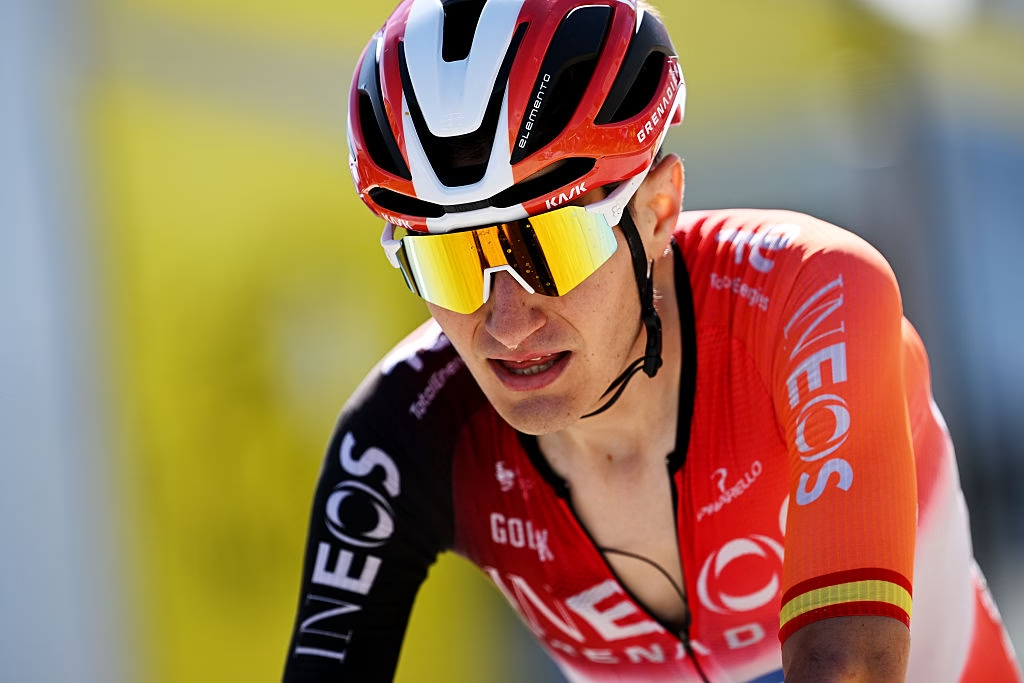
7. Carlos Rodríguez
Carlos Rodríguez remains one of the most reliable young GC riders in the Tour field. He climbs well, handles pressure, descends confidently and has already shown he can perform across three weeks.
Netcompany INEOS should be built around him, although the team’s Tour identity is very different from its old Sky and Ineos peak. Filippo Ganna gives the squad huge value in the opening TTT and time-trial structure. Michał Kwiatkowski brings experience. Thymen Arensman and Kévin Vauquelin can support or chase their own chances depending on the race situation. Dorian Godon adds all-round strength.
Rodríguez’s route fit is good but not perfect. He should be strong in the mountains, especially on the longer Alpine stages, and he is consistent enough to avoid obvious bad days. The problem is that the top contenders may be stronger in the time trials and more explosive on the key summit finishes. Rodríguez may need others to make mistakes if he is to reach the podium.
That does not make him a passive contender. He is tactically smart and can descend well, which may matter on stages where climbs are followed by technical sections or where positioning before the final ascent is crucial. He also has enough maturity to ride his own race rather than chase every acceleration.
His best path is consistency. If Pogačar, Vingegaard and Evenepoel fight each other into gaps and fatigue, Rodríguez can stay close enough to punish one bad day. A podium is difficult. A top five is realistic. A stage win or decisive Alpine move would make his race a success.
For more on his team context, see Tour de France 2026 team-by-team guide, A history of Team Sky at the Tour de France and Tour de France 2026 route analysis.
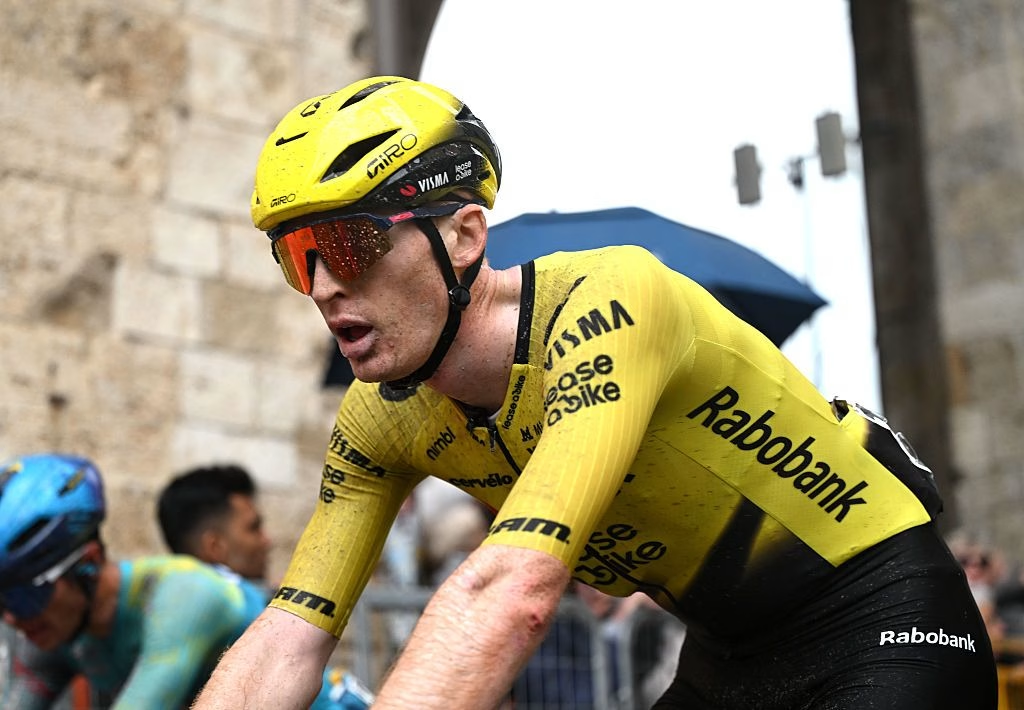
8. Matteo Jorgenson
Matteo Jorgenson may not be Visma | Lease a Bike’s leader, but he is too strong and too versatile to treat as only a helper.
His value to Vingegaard is obvious. Jorgenson can climb, time-trial, ride hard on rolling terrain, protect on dangerous stages and survive deep into mountain days. On this route, that makes him one of the most useful riders in the race.
But he is also a GC threat in his own right. If Visma want to create pressure on UAE, Jorgenson is an obvious card to move early. If Pogačar has to chase Jorgenson, Vingegaard benefits. If Jorgenson is allowed to gain time, Visma suddenly have two riders in the GC picture.
The route gives him several opportunities. The opening TTT should suit him. The stage 16 individual time-trial is also favourable for a rider who can sustain power and climb well enough. The mountain stages may expose him against the very best pure climbers, but he does not need to outclimb Pogačar to matter. He needs to make Visma’s tactics more complex for everyone else.
The biggest question is freedom. If Vingegaard is strong, Jorgenson’s role may be largely supportive. If Vingegaard is under pressure, Jorgenson could be used more aggressively. If the race becomes chaotic, he may find himself riding into a high GC position almost by accident.
Among the non-leaders, he may be the most tactically valuable rider in the Tour.
For more, see Matteo Jorgenson at the Tour de France 2026, Tour de France 2026 domestiques who could decide the race and how Tour de France teams work.
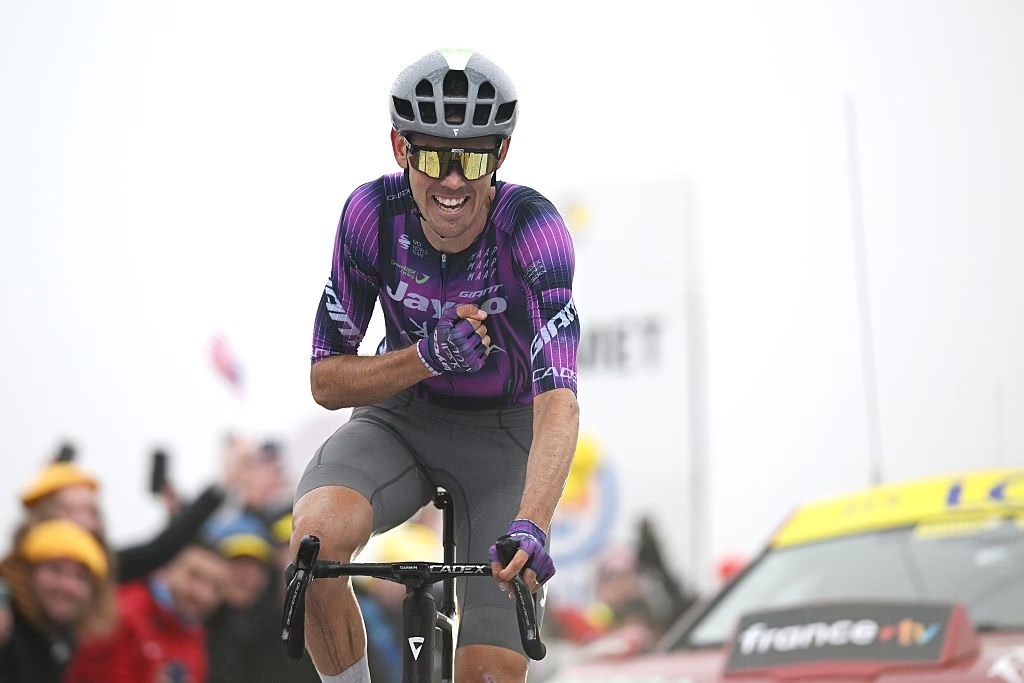 Photo Credit: Getty
9. Ben O’Connor
Ben O’Connor is a proven Grand Tour rider whose Tour de France challenge depends on one simple thing: avoiding the one damaging day.
At his best, O’Connor climbs well enough to stay with the second tier of GC riders, manages three-week fatigue effectively and can take advantage of difficult stages. He is not as explosive as Pogačar, not as dominant in long climbs as Vingegaard, and not as strong against the clock as Evenepoel, but he is durable.
Team Jayco-AlUla give him useful support. Luke Plapp, Mauro Schmid, Michael Matthews, Luke Durbridge, Felix Engelhardt, Kelland O’Brien and Pascal Ackermann create a squad with several objectives. That may help O’Connor if the team can protect him on key days, but it also means Jayco are unlikely to ride the entire race only around GC.
His best route to a high finish is attrition. The 2026 Tour has enough hard stages to crack riders above him in the ranking. If he stays steady through the Pyrenees, limits time-trial losses, and rides strongly in the final Alpine block, a top five or top seven is realistic.
The podium is harder. He probably needs at least one of the big favourites to have a bad day and another to fall out of contention. But O’Connor’s strength is that he often remains relevant when others fade.
He is a contender in the honest sense: unlikely to win, difficult to dismiss.
For more on the hardest terrain he has to survive, see Tour de France 2026 Pyrenees guide and Tour de France 2026 Alps guide.
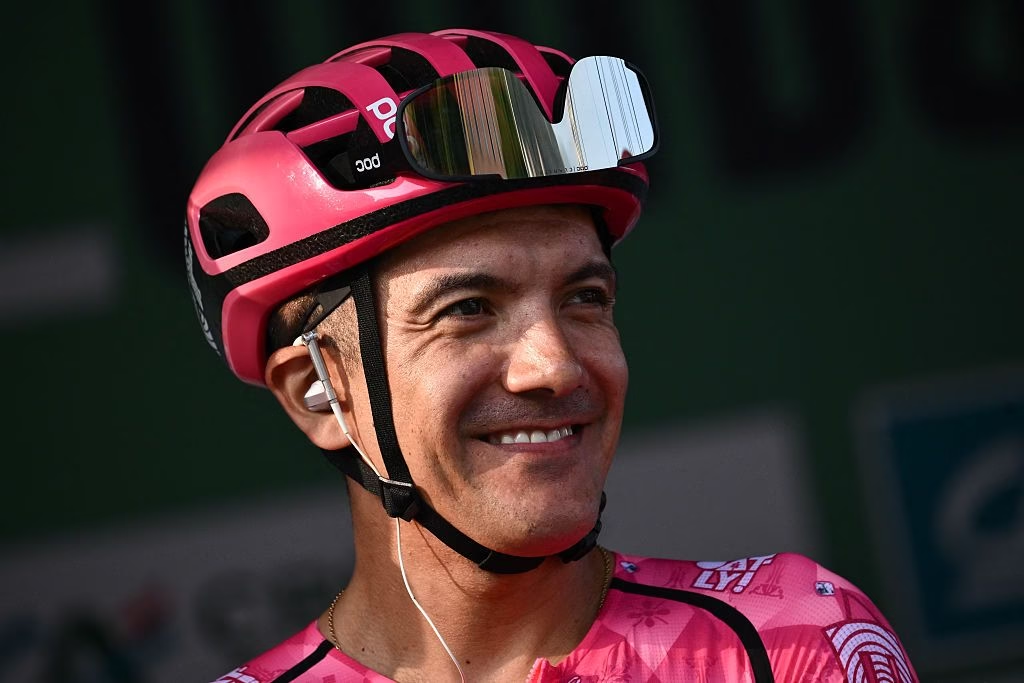 Photo Credit: Getty
10. Richard Carapaz
Richard Carapaz is one of the hardest riders to place in a Tour contenders preview because he can target GC, stage wins, the polka-dot jersey or all three depending on how the race develops.
As a pure yellow jersey contender, he sits below the top names. The time trials are not ideal, and the depth of the 2026 GC field makes a podium difficult. But as a rider who can attack in the mountains and force race situations, he remains dangerous.
EF Education-EasyPost have a squad that gives him freedom. Ben Healy, Georg Steinhauser, Kasper Asgreen, Michael Valgren, Alex Baudin, Sean Quinn and Max Walker can make EF visible across different terrains. Carapaz does not need a full train. He often races best when things are messy.
The question is whether he should stay committed to GC. If he loses time early, that may not be a disaster. It could open the door to breakaway freedom, mountain points and stage wins. If he stays close, he can remain a top-10 threat and make life harder for the favourites on the right days.
Carapaz’s best chances may come in stages where the big favourites pause. The Massif Central, Vosges, Jura and early Alpine stages could all suit him if he is allowed up the road. On a pure head-to-head Alpe d’Huez battle, he may struggle to match Pogačar and Vingegaard. In a tactical mountain stage, he is exactly the kind of rider they cannot ignore.
For more on that race type, see Tour de France 2026 route: best days for breakaways, Tour de France 2026 breakaway specialists to watch and what is a breakaway in the Tour de France?.
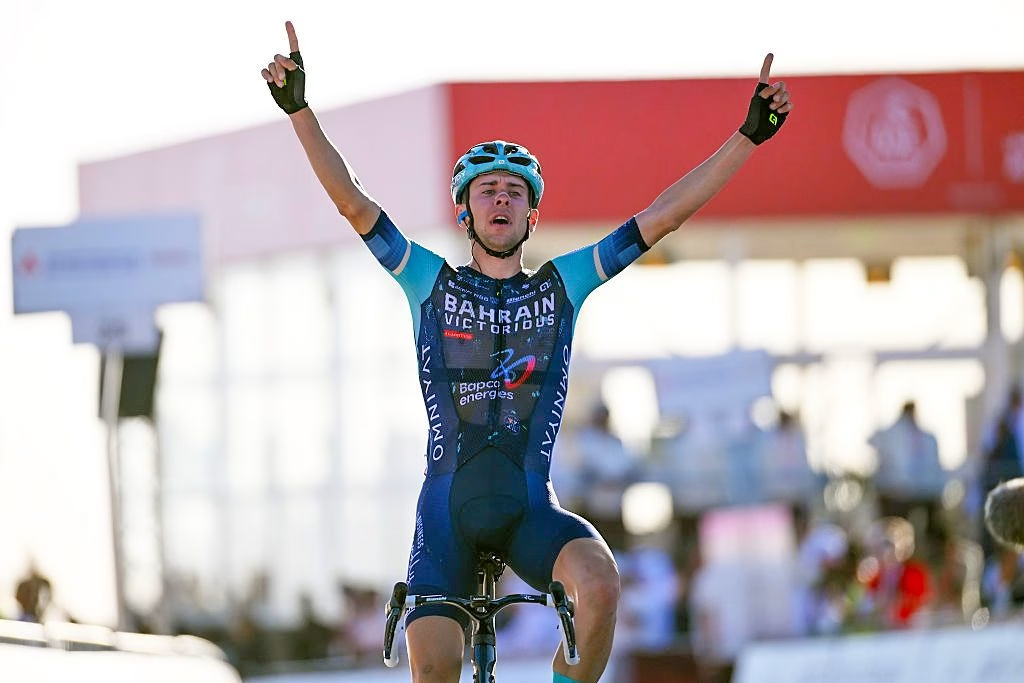
11. Antonio Tiberi
Antonio Tiberi is a strong top-10 contender with enough all-round ability to threaten higher if the race opens up.
His biggest asset is balance. He can climb, time-trial and recover across three weeks. That matters on a 2026 route where the GC will not be decided by one kind of stage. The Barcelona TTT, Évian-les-Bains time-trial, summit finishes and repeated mountain blocks all require a rider to be complete.
Bahrain Victorious bring a squad with several useful pieces. Lenny Martinez gives climbing depth and stage-winning potential. Damiano Caruso brings experience. Matej Mohorič can shape breakaways and tactical days. Kamil Gradek, Robert Stannard, Phil Bauhaus and Vlad Van Mechelen point to a team with mixed objectives.
That variety could help Tiberi, but it also means Bahrain may not have the kind of pure GC support that UAE, Visma or Red Bull can offer. He will need to manage his own effort carefully, especially on the hardest Alpine stages.
His podium chance is outside, but his top-10 chance is strong. If he improves again and avoids bad days, he can be one of the riders who steadily climbs the standings while flashier names lose time.
Tiberi is unlikely to define the Tour, but he could quietly finish higher than expected.
For more on the riders who could use the same terrain for stage wins or mountains points, see Tour de France 2026 climbers guide and Tour de France 2026 stage hunters to watch.
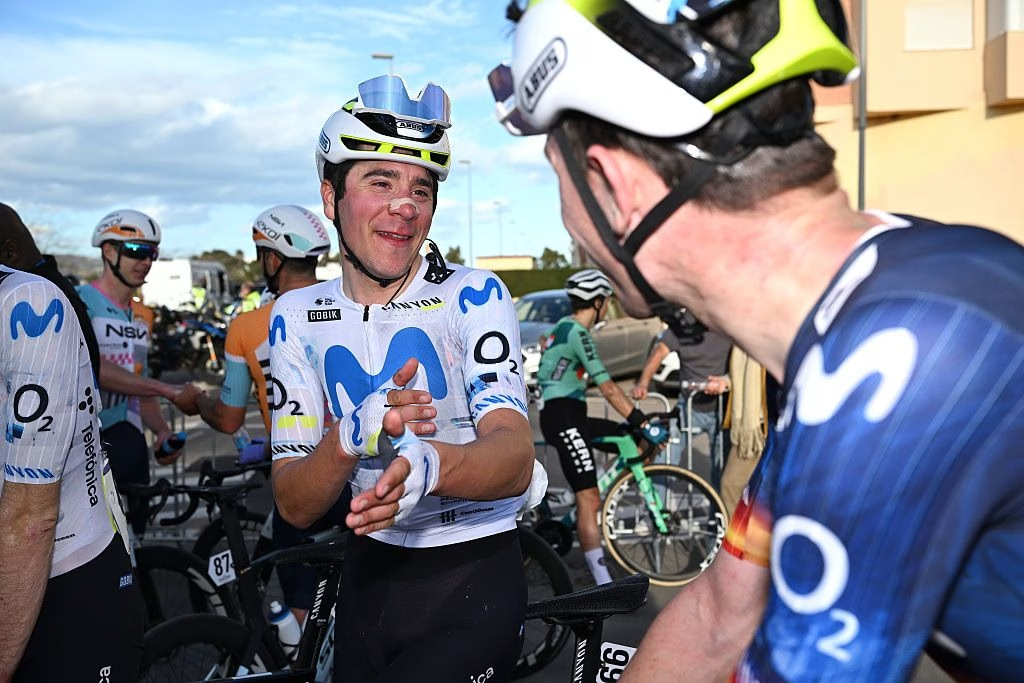
12. Cian Uijtdebroeks
Cian Uijtdebroeks gives Movistar a genuine GC project, even if the 2026 Tour may arrive too soon for a podium challenge.
The route is not a bad fit. He is a natural climber and should enjoy the repeated mountain tests. The issue is the level of the opposition and the time-trial demands. Against Pogačar, Vingegaard, Evenepoel, Ayuso and Rodríguez, he needs more than climbing promise. He needs a complete race.
Movistar’s team looks built around several climbing and stage-race options: Einer Rubio, Javier Romo, Pablo Castrillo, Jefferson Cepeda, Nelson Oliveira, Raúl García and Michel Heßmann. That gives Uijtdebroeks support, but also means roles may need to be clear. Rubio and Castrillo could chase mountain stage opportunities if GC becomes unrealistic.
For Uijtdebroeks, a successful Tour may not mean podium. A top 10, a strong third week and evidence that he can handle the pressure of the Tour would all count. The 2026 route is demanding enough to expose him, but also varied enough to help him learn where he stands.
He is not one of the favourites to win. He is one of the riders who may matter more in future Tours than this one. But if he takes a step forward, he can still become part of the top-10 battle.
For wider context on the next tier of GC names, see Tour de France 2026 dark horses for the general classification and Tour de France 2026 team-by-team guide.
 Photo Credit: Getty
Other GC names to watch
The Tour de France rarely follows a neat pre-race ranking. Crashes, illness, weather, crosswinds, tactical mistakes and team choices all change the contenders list once the race starts.
Tom Pidcock is the most obvious wildcard. He can climb, descend and win major mountain stages, but his GC ceiling depends on consistency and team depth. If he rides for stages, he is one of the most dangerous riders in the race. If he rides for GC, the question is whether he can avoid the one heavy loss that has often shaped his stage-race profile.
Kévin Vauquelin is another interesting name. With Netcompany INEOS, he could support Rodríguez, chase stage wins or sit near the top 10 if the race gives him space. His time-trialling and punch make him useful on a route with varied demands.
Thymen Arensman has the climbing and time-trial profile to be relevant, though his role inside Ineos may be more about support unless the race turns in his favour. Mattias Skjelmose gives Lidl-Trek another GC-quality rider behind Ayuso and could become a key tactical piece.
Lennert Van Eetvelt, Einer Rubio, Lenny Martinez, Paul Seixas, Valentin Paret-Peintre, Georg Steinhauser and Michael Storer all have enough climbing quality to influence the mountain stages. For most of them, the clearer target may be a stage win, a top-10 push or the polka-dot jersey rather than the overall podium.
For the mountain and stage-hunting angles, see best climbers at the Tour de France 2026, Tour de France 2026 stage hunters to watch and Paul Seixas and the next French Tour de France generation.
How the route shapes the GC battle
The 2026 Tour route is unusually awkward for contenders because it gives them no gentle opening. The Barcelona team time-trial can create gaps immediately, and the revised format means team strength and leader acceleration both matter.
The first major summit finish at Gavarnie-Gèdre then arrives early enough to expose riders who have not settled into the race. That matters because a contender who loses time in the TTT and then again in the Pyrenees may already be forced into attacking mode.
The middle of the race keeps the pressure on without always using the most obvious mountain stages. The Massif Central, Vosges and Jura blocks can damage riders who are waiting only for the Alps. This is where Carapaz, Jorgenson, Ayuso, Lipowitz or Rodríguez could use the race against the top favourites.
Stage 16’s individual time-trial is one of the biggest GC points in the race. Evenepoel will see it as an opportunity. Pogačar should expect to be strong. Vingegaard must limit damage. Riders such as Ayuso, Jorgenson, Rodríguez and Tiberi need to keep their losses under control.
Then come the Alps. Orcières-Merlette starts the final block, but stages 19 and 20 should decide the race if the gaps are still close. Two consecutive Alpe d’Huez finishes are not just a novelty. They create a recovery test, a tactical test and a mental test. Stage 20, with the Croix de Fer, Télégraphe, Galibier, Sarenne and Alpe d’Huez, is the final major mountain showdown.
For the key terrain, see Tour de France 2026 summit finishes guide, Tour de France 2026 mountain stages ranked by difficulty and why back-to-back Alpe d’Huez finishes could define the Tour de France 2026.
 Photo Credit: Getty
The time-trial factor
The 2026 Tour has two time-trial elements, and both matter.
The opening team time-trial in Barcelona is short, but it can still create useful gaps. It also immediately tests team depth. UAE, Visma, Red Bull-BORA-hansgrohe and Netcompany INEOS should all expect to be strong. Any GC team that loses too much time there will spend the first week chasing.
The stage 16 individual time-trial is more straightforward as a contender test. Evenepoel will probably see it as one of his biggest weapons. Pogačar should also expect to gain time on most rivals. Vingegaard has to stay close. Ayuso, Rodríguez, Jorgenson and Tiberi need to be strong enough to avoid sliding down the standings.
The timing is important. Stage 16 comes after the second rest day, when recovery can be uneven. Some riders come out of rest days flat. Others use them well. A time-trial straight after that pause can catch riders before they have found rhythm again.
The time trials do not make this a specialist’s Tour, but they do raise the bar for pure climbers. Anyone who wants to win cannot simply wait for Alpe d’Huez. They must survive the clock first.
For more, see best time-triallists at the Tour de France 2026, A history of team time trials at the Tour de France and Tour de France 2026 team time-trial explained.
The team support factor
The 2026 Tour contenders are not only separated by individual strength. They are separated by team structure.
UAE Team Emirates-XRG look the deepest on paper. Pogačar has Adam Yates, Isaac del Toro, Brandon McNulty, Nils Politt, Tim Wellens, Felix Großschartner and Florian Vermeersch. That gives him climbing support, TTT power, road control and tactical options.
Visma | Lease a Bike look highly focused around Vingegaard, with Sepp Kuss, Matteo Jorgenson, Victor Campenaerts, Edoardo Affini, Bruno Armirail, Davide Piganzoli and Per Strand Hagenes. It is a strong blend of mountain depth and flat-road power.
Red Bull-BORA-hansgrohe may have the most interesting structure. Evenepoel gives them time-trial and GC star power. Lipowitz and Hindley give them mountain options. Cattaneo, Tratnik, Van Gils, Tim van Dijke and Nico Denz add strength across different stages. Their issue is not depth. It is clarity.
Netcompany INEOS have Ganna, Kwiatkowski, Arensman, Godon and Vauquelin around Rodríguez, but the team no longer looks like the Tour-controlling machine it once was. Lidl-Trek have enough strength around Ayuso, but also have sprint and stage objectives through Pedersen and others.
The strongest individual rider still needs the right support. On this route, domestiques will matter in Barcelona, in the Pyrenees, through the hilly middle and on the final Alpine weekend.
For more, see Tour de France 2026 domestiques who could decide the race, what is a domestique at the Tour de France? and how Tour de France teams work.
 Photo Credit: Getty
Who can win the Tour de France 2026?
The realistic winning group is small.
Pogačar is the favourite because he has the strongest combination of recent Tour-winning record, team support, climbing, time-trialling and tactical range. He can gain time in almost every part of the route.
Vingegaard is the most serious challenger because he has beaten Pogačar before and because the final Alpine block suits his best qualities. If he is within striking distance before Alpe d’Huez, he can still win the Tour.
Evenepoel is the third genuine winner because of the time trials and because Red Bull-BORA-hansgrohe give him enough team strength to make the race more than a two-rider battle. He needs to climb at his best, but the route does give him a path.
Ayuso is the best of the next group. Del Toro, Lipowitz, Rodríguez and Jorgenson can all reach the podium if the race opens up, but they probably need a major shift in circumstances to win the Tour outright.
The cleanest prediction is that Pogačar starts as favourite, Vingegaard is the main threat, and Evenepoel is the rider who can change the race if the time trials go heavily his way.
For the race mechanics behind that calculation, see how the Tour de France general classification works and Tour de France 2026 jerseys explained.
Podium contenders
The podium fight may be more open than the yellow jersey battle.
Pogačar, Vingegaard and Evenepoel are the obvious top three on paper, but it is rare for a Tour to follow the pre-race list exactly. Illness, crashes, bad rest days and tactical surprises usually create at least one change.
Ayuso is the clearest podium outsider. Rodríguez has the consistency to profit if others fade. Lipowitz could become a podium rider if Red Bull give him enough protection or if Evenepoel struggles. Jorgenson can reach a high overall position if Visma use him aggressively. Del Toro may have the legs, but team role is the issue.
O’Connor, Tiberi, Carapaz and Uijtdebroeks are more likely to fight for the lower half of the top 10, but each has a plausible path higher if the race becomes more chaotic than expected.
The final Alpine weekend gives all of them a reason to keep fighting. A rider who looks boxed into fifth or sixth before stage 19 could still find the podium if someone cracks on the double Alpe d’Huez finish.
For more on the route’s most decisive days, see Tour de France 2026 route: best days for GC attacks and where can the Tour de France 2026 be won before the Alps?.
 Photo Credit: Getty
Dark horses and outsiders
The dark horses are the riders who may not start as podium favourites but could become central if the race opens.
Tom Pidcock is the most obvious wildcard. His descending, climbing and one-day explosiveness can win stages that look too hard for most riders but not controlled enough for the GC teams. His Alpe d’Huez history gives him a clear Tour reference point.
Mattias Skjelmose gives Lidl-Trek another option if Ayuso’s race changes. Kévin Vauquelin and Thymen Arensman give Netcompany INEOS depth behind Rodríguez. Lennert Van Eetvelt could become one of the most interesting attacking climbers if Lotto-Intermarché give him freedom.
Paul Seixas is unlikely to be a yellow jersey contender yet, but his presence is important for French cycling. He is exactly the kind of rider who can attract attention in the mountains even if the overall podium is too much too soon.
Lenny Martinez may be better suited to stage wins and the mountains classification than full GC, but on a route with repeated summit finishes, he should not be ignored. Valentin Paret-Peintre, Einer Rubio, Michael Storer and Georg Steinhauser also fit the aggressive climbing outsider profile.
For more on the next tier, see Tour de France 2026 dark horses for the general classification, Paul Seixas and the next French Tour de France generation and Tom Pidcock at the Tour de France 2026.
Stage hunters who could disrupt the GC race
Stage hunters can change the yellow jersey battle even when they are not riding for the overall win.
A strong breakaway can force GC teams to chase. A satellite rider can help a leader later in the stage. A dangerous climber who has lost time can go up the road and force rivals into awkward choices.
Carapaz is the most obvious crossover rider here. If his GC slips, he becomes one of the best breakaway climbers in the race. Jorgenson can also serve as a GC threat and satellite rider. Pidcock can win from reduced groups and dangerous descents. Healy, Steinhauser, Mohorič, Skujiņš, Simmons and Van Gils all have the ability to shape transitional and mountain stages.
This matters because the 2026 route has several stages where the favourites may not want to chase all day. The Massif Central, Vosges and Jura stages could all become tactical traps. If UAE, Visma and Red Bull disagree over responsibility, stage hunters can take control.
For more, see Tour de France 2026 stage hunters to watch, Tour de France 2026 breakaway stages ranked and Tour de France 2026 route: best days for breakaways.
White jersey contenders
The white jersey, awarded to the best young rider, could be shaped by the same riders fighting for the top 10.
Isaac del Toro is the biggest name if he is eligible and protected enough to ride high on GC. Florian Lipowitz, Carlos Rodríguez, Antonio Tiberi, Cian Uijtdebroeks and Paul Seixas all belong in the wider young-rider conversation depending on age eligibility and team roles.
The white jersey can sometimes become a separate race, but in 2026 it may be tied directly to the overall standings. If one of the younger riders is close to the podium, they are likely to control the classification. If the top young GC riders lose time, stage hunters may come into play.
This is another reason the early TTT and stage 16 time-trial matter. A young climber who loses too much time against the clock may have to chase mountain stages rather than defend white.
For more on classification basics, see Tour de France 2026 jerseys explained, how Tour de France time cuts work and beginner’s guide to Men’s Tour de France 2026.
Where the Tour can be won and lost
The 2026 Tour can be damaged on stage 1, shaped in the Pyrenees, narrowed by the time-trial and decided on Alpe d’Huez.
Stage 1 matters because the Barcelona TTT gives strong teams an immediate chance to gain time. Stage 6 matters because Gavarnie-Gèdre is the first major summit finish. The middle stages matter because they can weaken teams before the Alps. Stage 16 matters because the individual time-trial is late enough to catch tired riders. Stages 19 and 20 matter because back-to-back Alpe d’Huez finishes are hard to control.
The biggest single day may be stage 20. A route including the Croix de Fer, Télégraphe, Galibier, Sarenne and Alpe d’Huez is not just a climbing test. It is a full-team test, recovery test and tactical test. If the yellow jersey is still close, that stage can decide everything.
But the winner may already have built the foundations earlier. A few seconds in Barcelona, a small gap in the Pyrenees, a good time-trial in stage 16 and a calm ride on stage 19 could leave the final day as defence rather than attack.
For more, see Tour de France 2026 route: best days for GC attacks, where can the Tour de France 2026 be won before the Alps? and Tour de France 2026 queen stage guide.
Tour de France 2026 contenders verdict
The 2026 Tour de France begins with Pogačar as the rider to beat, Vingegaard as the most proven challenger and Evenepoel as the contender with the clearest route to disrupting the usual pattern.
Behind them, Ayuso looks like the strongest podium outsider, while Del Toro, Lipowitz, Rodríguez and Jorgenson may shape the race through team tactics as much as their own GC ambitions. O’Connor, Carapaz, Tiberi and Uijtdebroeks give the top-10 battle depth, while Pidcock, Seixas, Martinez, Vauquelin, Skjelmose, Van Eetvelt and others can still influence how the mountains are raced.
The route is hard enough to reward the strongest climber, but varied enough to punish any contender with a weak team, poor time-trial, bad recovery day or tactical hesitation. The Barcelona team time-trial starts the sorting process. The Pyrenees ask the first serious climbing question. Stage 16 brings the clock back into the GC fight. Alpe d’Huez then gets two chances to decide the race.
Pogačar is the favourite. Vingegaard is the danger. Evenepoel is the disruptor. The rest are chasing the moment when the Tour becomes less predictable.
For more Tour de France coverage, visit our Tour de France hub, Tour de France 2026 full route guide and how to watch Tour de France 2026 in the UK.