
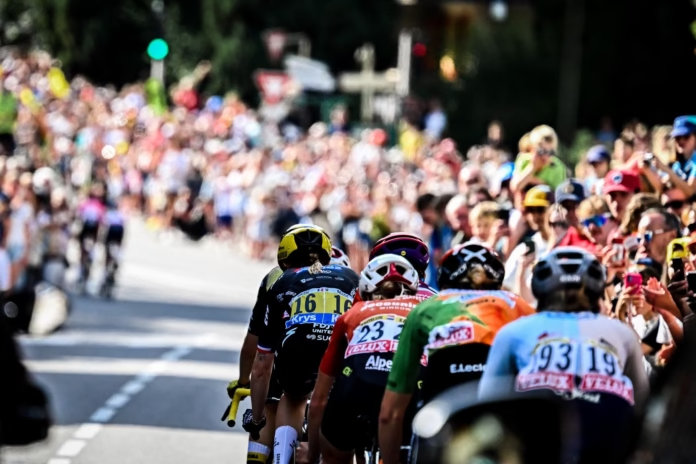
The Tour de France Femmes 2026 brings 21 teams to Lausanne, but they arrive with very different definitions of a successful nine days.
Some have one overriding objective. FDJ United-SUEZ are built around Demi Vollering and the yellow jersey, while Team Visma | Lease a Bike have constructed their squad specifically to help defending champion Pauline Ferrand-Prévot win the Tour again. Movistar can use the Stage 4 time trial to put Marlen Reusser into a position the climbers then have to attack.
Others have deliberately spread their chances. Lidl-Trek can race for Niamh Fisher-Black on GC, Elisa Balsamo in the sprints and Isabella Holmgren in the white jersey competition. SD Worx-Protime have Anna van der Breggen for the overall classification, Lorena Wiebes for the flat finishes and Lotte Kopecky when the terrain becomes harder.
Then come the teams whose best route to success is to disrupt those plans. Breakaways, mountains points, reduced sprints and one well-timed stage win can define an entire Tour for teams without a realistic yellow jersey contender.
The Tour de France Femmes 2026 route gives almost every type of squad something to work with. Across nine stages there are flat finishes, hilly days, the Dijon individual time trial, Mont Ventoux and the short final mountain stage around Nice.
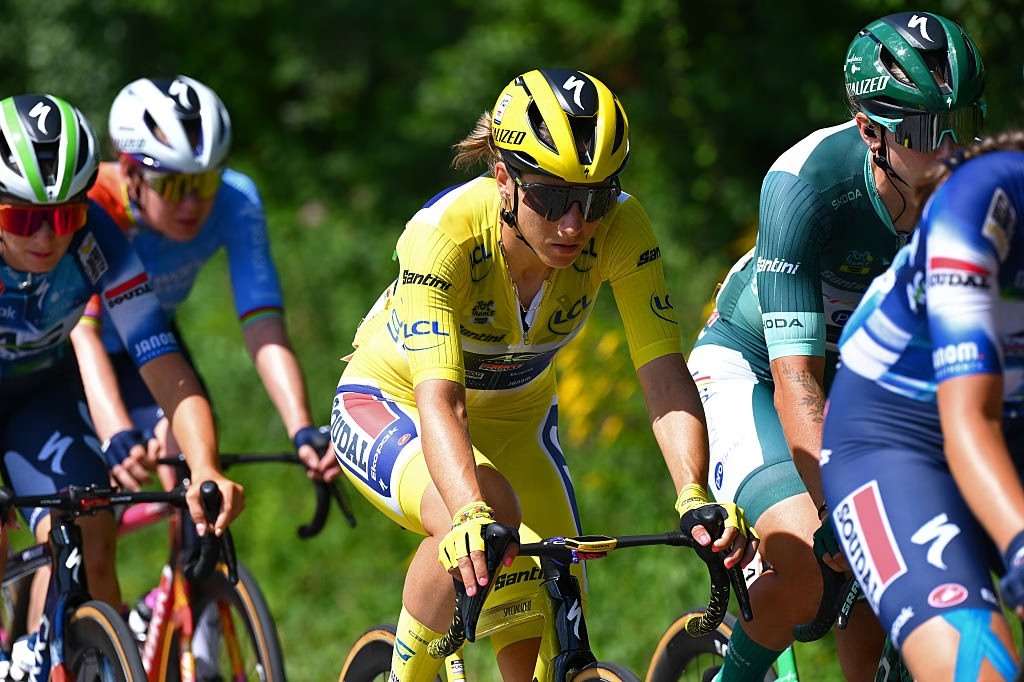 Photo Credit: Getty
AG Insurance-Soudal
Squad: Mireia Benito, Letizia Borghesi, Shari Bossuyt, Lore De Schepper, Justine Ghekiere, Kim Le Court-Pienaar, Urška Žigart.
Leader: Kim Le Court-Pienaar
Key riders: Justine Ghekiere, Urška Žigart, Shari Bossuyt
Main goals: Top-five GC, stage wins, polka dot jersey
AG Insurance-Soudal have made the overall classification the central objective, with Kim Le Court-Pienaar targeting the top five after her breakthrough 2025 Tour. She won a stage, spent four days in yellow and established herself as much more than a rider who could simply profit from selective finishes.
The supporting cast gives AG several ways to help her. Žigart and De Schepper strengthen the climbing structure, while Ghekiere has freedom to attack and provides both a potential satellite rider and a genuine mountains classification threat. Having already won the Tour polka dot jersey, she is one of the clearest riders capable of turning repeated breakaways into another classification campaign.
Bossuyt gives the team a quicker option in the Belgian champion’s jersey, allowing AG to pursue results on the faster days without changing the hierarchy around Le Court-Pienaar. The wider shape of the squad fits the aggressive identity described in our AG Insurance-Soudal 2026 team guide.

Canyon SRAM
Squad: Zoe Bäckstedt, Chiara Consonni, Rosa Klöser, Antonia Niedermaier, Kasia Niewiadoma-Phinney, Soraya Paladin, Agnieszka Skalniak-Sójka.
Leaders: Kasia Niewiadoma-Phinney, Antonia Niedermaier
Key riders: Zoe Bäckstedt, Chiara Consonni, Soraya Paladin
Main goals: Yellow jersey, white jersey, time trial and sprint stages
Canyon SRAM have one of the most complete teams in the race because they can remain competitive without forcing every stage through the same rider.
Kasia Niewiadoma-Phinney knows how to win the Tour and remains the experienced GC reference, but Niedermaier’s second place at the Giro means she can no longer be treated simply as an understudy. The German combines strong climbing with enough time trial ability to make her a serious overall contender and one of the leading white jersey favourites.
Bäckstedt gives Canyon SRAM a major Stage 4 objective in Dijon and is one of the few riders capable of challenging Marlen Reusser directly against the clock. Consonni covers the bunch sprints, while Paladin and Skalniak-Sójka provide the positioning and tactical work required to keep two GC leaders safe.
The interesting question is how long Canyon SRAM maintain dual leadership. If Dijon separates Niewiadoma-Phinney and Niedermaier significantly, the Tour may answer it for them. Their wider 2026 structure is covered in the Canyon SRAM 2026 Women’s WorldTour team guide.
Cofidis
Squad: Julie Bego, Ema Comte, Amalie Dideriksen, Victorie Guilman, Hannah Ludwig, Malwina Mul, Nikola Nosková.
Leaders: Amalie Dideriksen, Julie Bego
Key riders: Nikola Nosková, Hannah Ludwig
Main goals: Sprint results, white jersey, breakaways
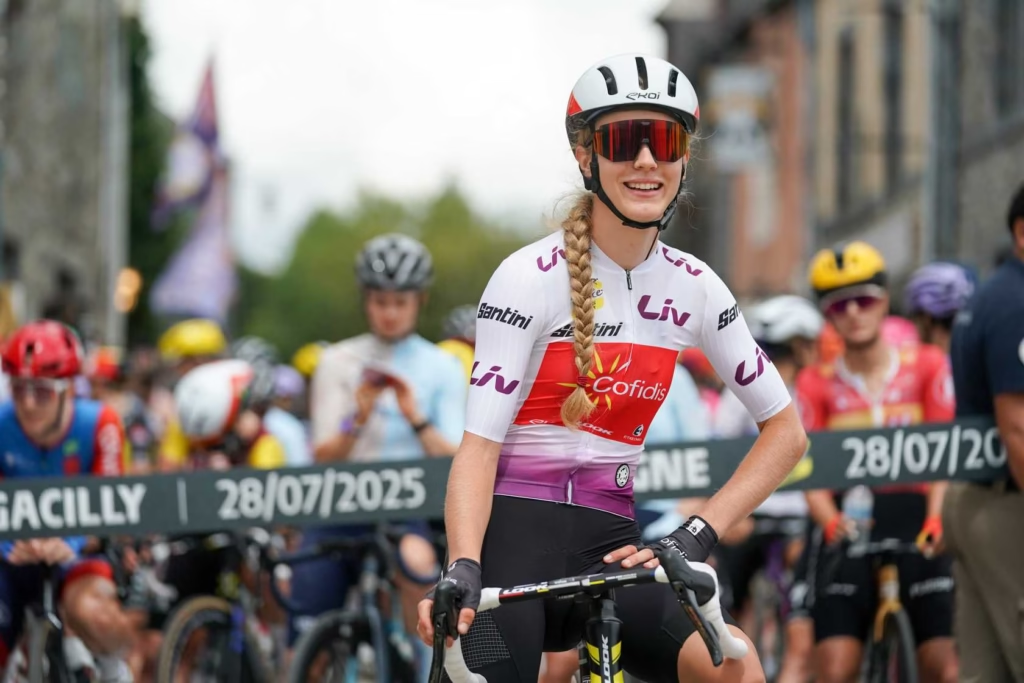
Cofidis do not have a rider around whom a realistic yellow jersey campaign can be built, so their Tour is much more about maximising individual opportunities.
Dideriksen gives them the clearest chance in faster finishes. She is unlikely to beat Wiebes purely on speed but becomes more interesting when a stage has been difficult enough to reduce the field before the sprint.
Bego brings a different target. She spent much of the 2025 Tour in the white jersey before Nienke Vinke took over late in the race, giving her direct experience of defending a classification across a Grand Tour.
Nosková strengthens Cofidis on climbing days, while the absence of a major GC objective should encourage the team to use the breakaway rather than simply wait for the biggest squads to dictate the race.
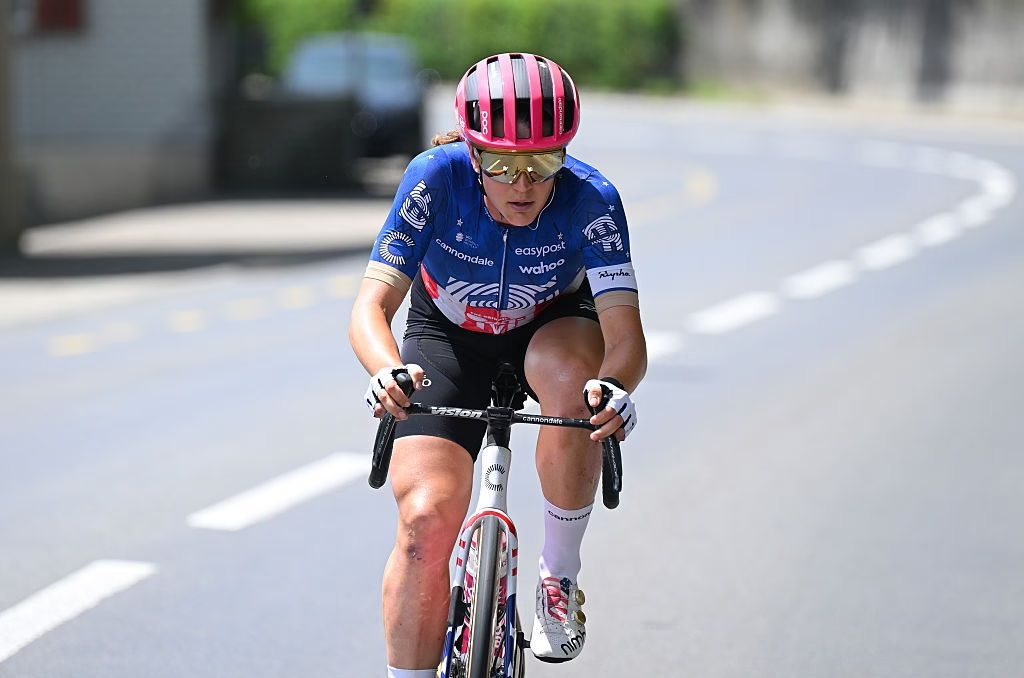 Photo Credit: Getty
EF Education-Oatly
Squad: Alice Towers, Kristen Faulkner, Magdeleine Vallieres, Henrietta Christie, Nina Berton, Cédrine Kerbaol, Noemi Rüegg.
Leader: Cédrine Kerbaol
Key riders: Kristen Faulkner, Noemi Rüegg, Magdeleine Vallieres
Main goals: GC top five, stage wins, time trial and breakaways
EF have assembled one of the most interesting stage-hunting squads in the race around a legitimate GC campaign for Cédrine Kerbaol.
Kerbaol has the balance required for this route. She can time trial well enough to avoid beginning the mountains with a major deficit and climb strongly enough to remain around the leading overall contenders. She begins just outside the headline yellow jersey favourites but has a credible route towards the top five.
The rest of the squad allows EF to race aggressively without compromising her. Olympic road champion Kristen Faulkner can target Dijon or attack from distance, Noemi Rüegg is one of the strongest reduced-sprint riders in the race and Vallieres can make selective, aggressive stages work in her favour.
Towers gives EF another climbing option, while Christie and Berton complete a squad that should rarely need to wait passively for another team to make the race. The broader team structure is covered in our EF Education-Oatly 2026 Women’s WorldTour team guide.
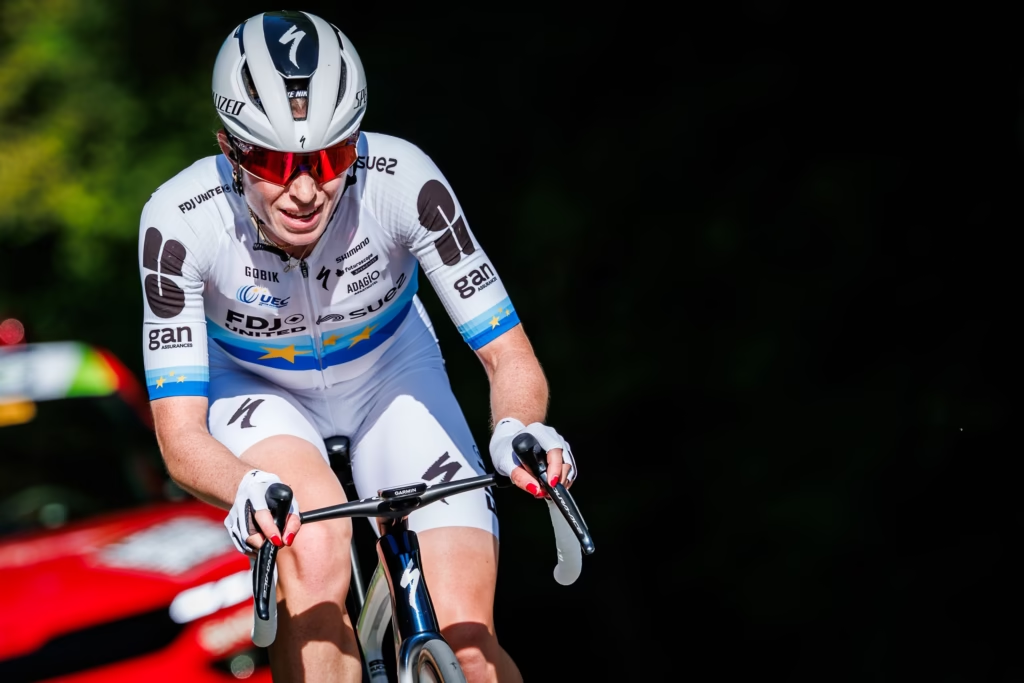
FDJ United-SUEZ
Squad: Juliette Berthet, Célia Gery, Franziska Koch, Amber Kraak, Marie Le Net, Evita Muzic, Demi Vollering.
Leader: Demi Vollering
Key riders: Evita Muzic, Juliette Berthet
Main goal: Win the Tour
There is very little ambiguity here.
Demi Vollering is at the Tour to win yellow, and FDJ United-SUEZ have selected the team accordingly.
Vollering arrives after winning the Giro and begins as the narrow favourite for the Tour. The route gives her enough climbing to make sustained mountain power decisive, but the team’s job is to ensure she reaches those stages without wasting energy or conceding unnecessary time.
Muzic and Berthet form the key mountain support, both capable of remaining useful when the GC group has already been significantly reduced. Koch, Kraak and Le Net provide the horsepower required through faster terrain, while Gery adds another young and versatile option.
Stage victories matter if they serve the bigger objective. Everything about this selection points towards protecting Vollering first and allowing the race to develop around her later. The FDJ United-SUEZ 2026 team guide explains the wider structure around that leadership.
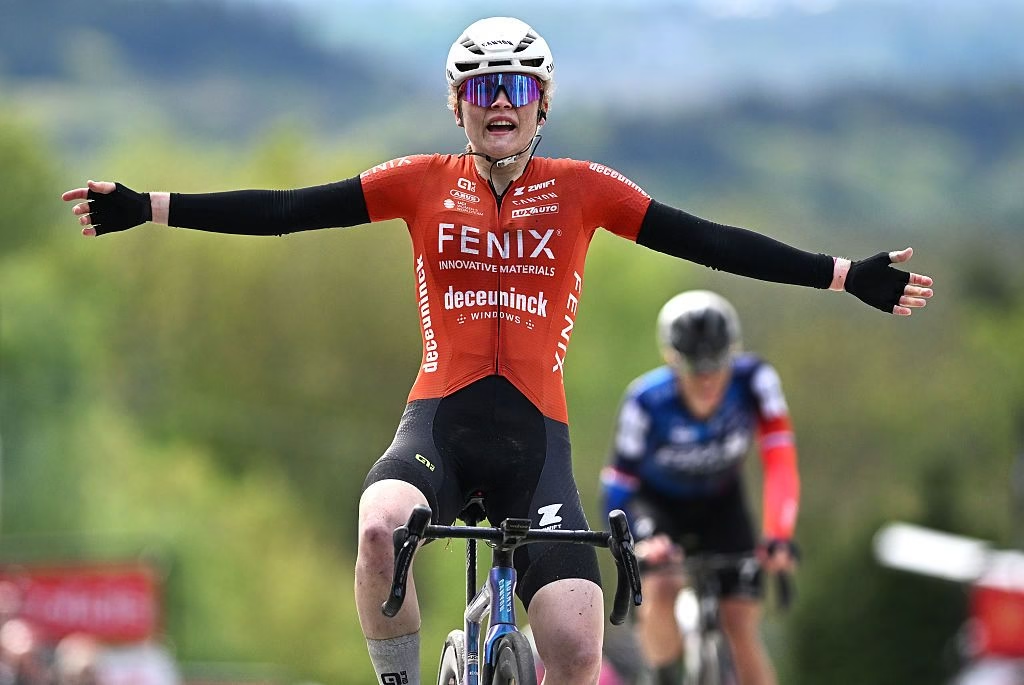
Fenix-Premier Tech
Squad: Sara Casasola, Lotte Claes, Millie Couzens, Yara Kastelijn, Charlotte Kool, Puck Pieterse, Christina Schweinberger.
Leaders: Puck Pieterse, Charlotte Kool
Key riders: Yara Kastelijn, Sara Casasola, Christina Schweinberger
Main goals: Stage wins across multiple terrains
Fenix-Premier Tech are almost the opposite of FDJ. There is no overriding GC campaign and no need to force every stage through a single leader.
Charlotte Kool gives them one of the few sprinters capable of beating Wiebes directly, making the cleanest bunch finishes obvious targets. Schweinberger should be important to positioning her through the final kilometres.
Once the road becomes harder, Puck Pieterse takes over as the most dangerous option. She can win from selective groups, punchy finishes and aggressive hilly stages, particularly on days when the pure sprinters have already disappeared.
Kastelijn and Casasola give Fenix strong breakaway and climbing options, while Couzens and Claes add flexibility around those objectives. The team can change leader according to the terrain without compromising a larger classification target, which is why their 2026 Fenix-Premier Tech team guide already identified versatility as their defining strength.
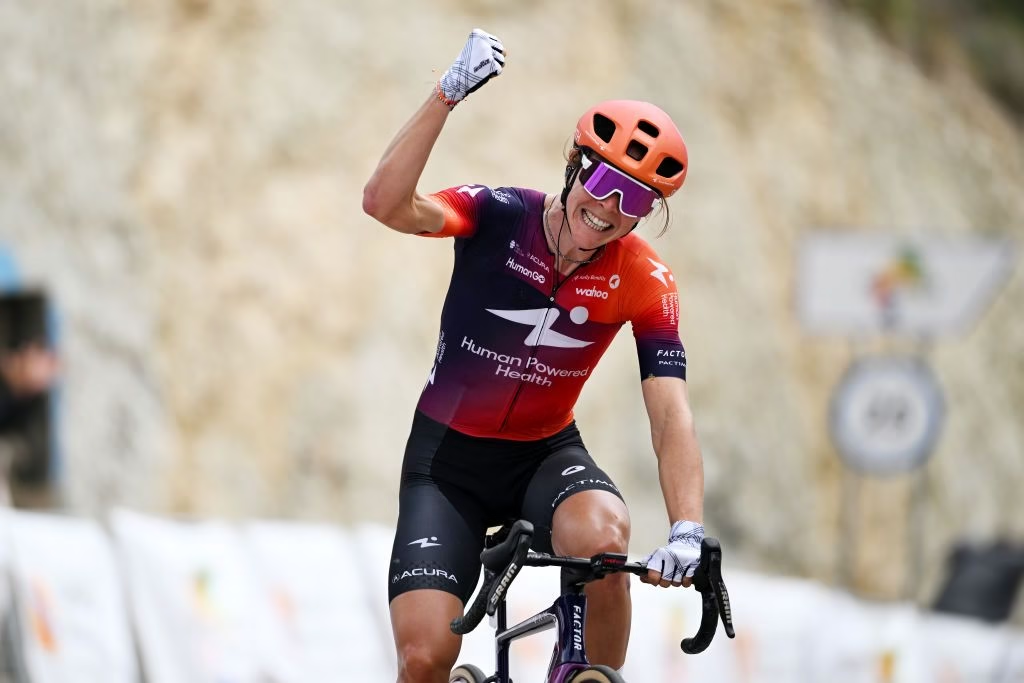
Human Powered Health
Squad: Nina Buijsman, Carlotta Cipressi, Thalita de Jong, Barbara Malcotti, Marit Raaijmakers, Titia Ryo, Lily Williams.
Leaders: Thalita de Jong, Lily Williams
Key riders: Barbara Malcotti, Carlotta Cipressi
Main goals: Stage wins and breakaways
Human Powered Health arrive without one dominant leader, which should give them the freedom to race much more aggressively than the GC teams.
Williams is the strongest option when a difficult stage produces a reduced group. She is not a pure sprinter but carries enough speed to become dangerous once climbing has removed the quickest riders.
De Jong offers something similar, with enough versatility to stay involved across terrain that sits between conventional sprinting and climbing. Malcotti strengthens the team on harder days, while Cipressi, Buijsman and Raaijmakers give them further options for moves.
This is a team that benefits when the race becomes difficult to categorise. They do not want the favourites controlling everything neatly into the final five kilometres, which fits the flexible structure outlined in the Human Powered Health 2026 team guide.
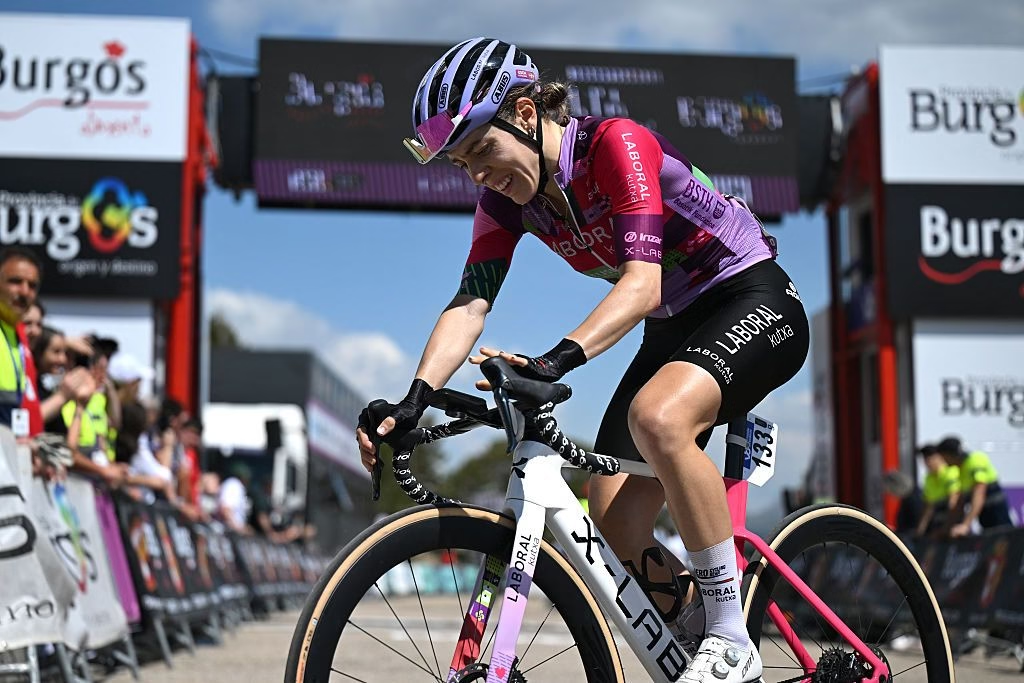
Laboral Kutxa-Fundación Euskadi
Squad: Naia Amondarain, Yuliia Biriukova, Idoia Eraso Lasa, Arianna Fidanza, Usoa Ostolaza, Paula Patiño, Debora Silvestri.
Leader: Usoa Ostolaza
Key riders: Paula Patiño, Yuliia Biriukova
Main goals: Stage wins, breakaways and mountains classification
Usoa Ostolaza is the team’s reference point and the rider most likely to produce a major result on climbing terrain.
The interesting question is whether Laboral Kutxa protect an overall position or use Ostolaza much more aggressively. If she loses meaningful time in Dijon, the second option becomes far more attractive because the GC teams may then allow her into strong breakaways.
That also brings the polka dot jersey into play. Ostolaza has the climbing level to accumulate points across repeated hilly and mountain days without needing to match Vollering or Ferrand-Prévot on the decisive summit finish.
Patiño and Biriukova add climbing depth, while Fidanza offers a quicker option. The team’s ideal Tour probably involves visibility from breakaways rather than quietly defending a position outside the top 10.
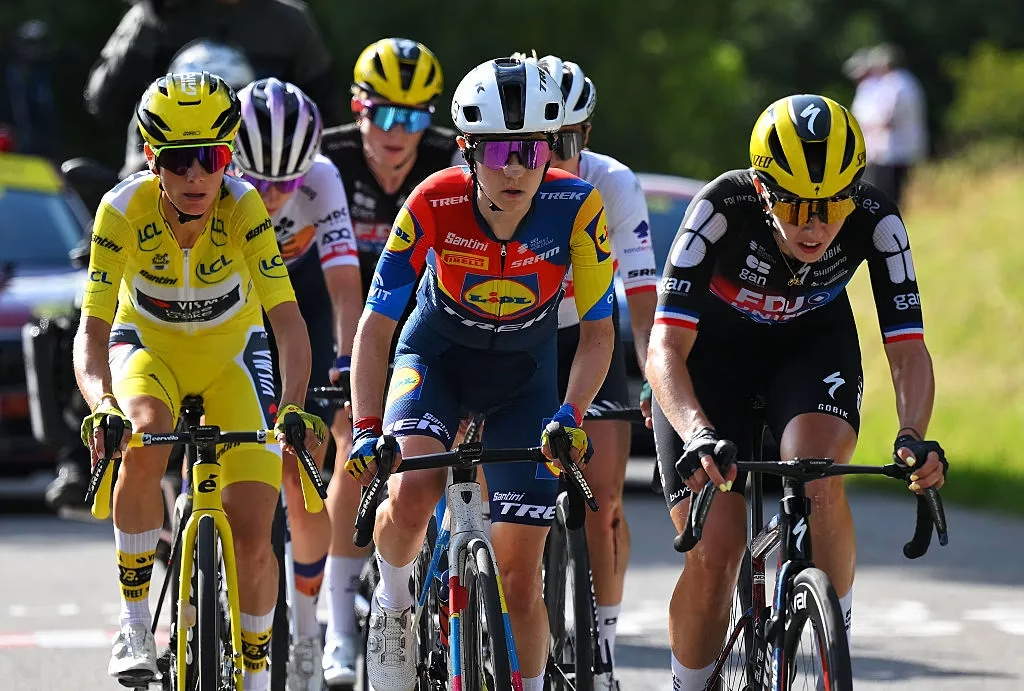 Photo Credit: Getty
Lidl-Trek
Squad: Loes Adegeest, Elisa Balsamo, Lucinda Brand, Niamh Fisher-Black, Isabella Holmgren, Amanda Spratt, Riejanne Markus.
Leader: Niamh Fisher-Black
Key riders: Elisa Balsamo, Isabella Holmgren, Riejanne Markus
Main goals: Top-five GC, stage wins, white jersey
Lidl-Trek have enough depth to pursue three substantial objectives without any of them feeling like an afterthought.
Niamh Fisher-Black provides the main GC route after another strong Giro. The mountains suit her, and a top-five finish is a realistic target if she can limit her losses against the clock.
Elisa Balsamo gives Lidl-Trek one of the strongest sprint options outside Wiebes and Kool. Her ability to handle harder terrain makes her particularly useful on a Tour where not every fast finish is genuinely easy.
Then there is Isabella Holmgren, whose Giro white jersey and seventh overall place make her a serious young rider contender rather than simply a debutant gathering experience. She may initially work around Fisher-Black, but Lidl-Trek could quickly find themselves with another classification worth protecting.
Brand, Markus and Spratt bring enormous stage-racing experience, while Adegeest provides another aggressive card. It is a squad designed to remain relevant almost regardless of how the Tour develops, much like the broader roster described in the Lidl-Trek 2026 Women’s WorldTour team guide.
Liv AlUla Jayco
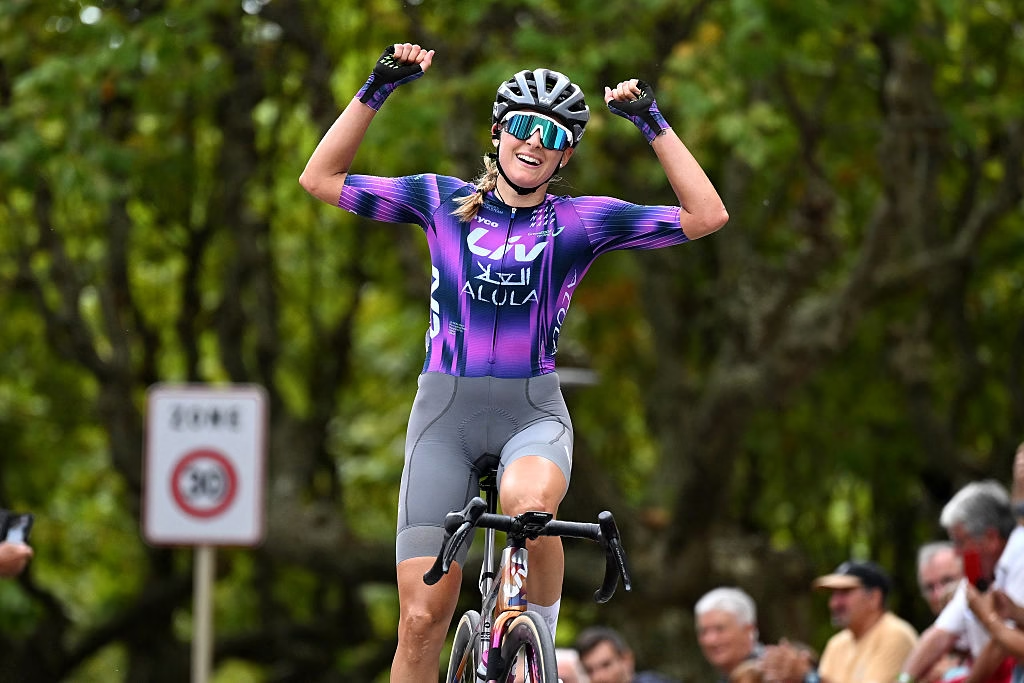
Squad: Mackenzie Coupland, Nadia Gontova, Jeanne Korevaar, Letizia Paternoster, Ruby Roseman-Gannon, Silke Smulders, Monica Trinca Colonel.
Leaders: Monica Trinca Colonel, Ruby Roseman-Gannon
Key riders: Letizia Paternoster, Mackenzie Coupland
Main goals: Stage wins and an outside GC result
Liv AlUla Jayco arrive with more interest in individual stages than controlling the general classification, although Trinca Colonel gives them a rider capable of producing a respectable overall result if she carries her climbing form through nine stages.
Their greatest strength is variety. Paternoster offers pure finishing speed, while Roseman-Gannon is much more dangerous when the race has been selective before the sprint. That gives the team two different approaches to faster stages rather than forcing one rider to cover everything.
Australian champion Coupland makes her Tour debut after a major step forward in 2026 and adds another attacking option. Gontova strengthens the climbing depth, while Korevaar and Smulders provide experienced support.
Liv’s route towards a stage victory is more likely to come through flexibility than controlling a race from distance, which reflects the opportunistic identity discussed in our Liv AlUla Jayco 2026 team guide.
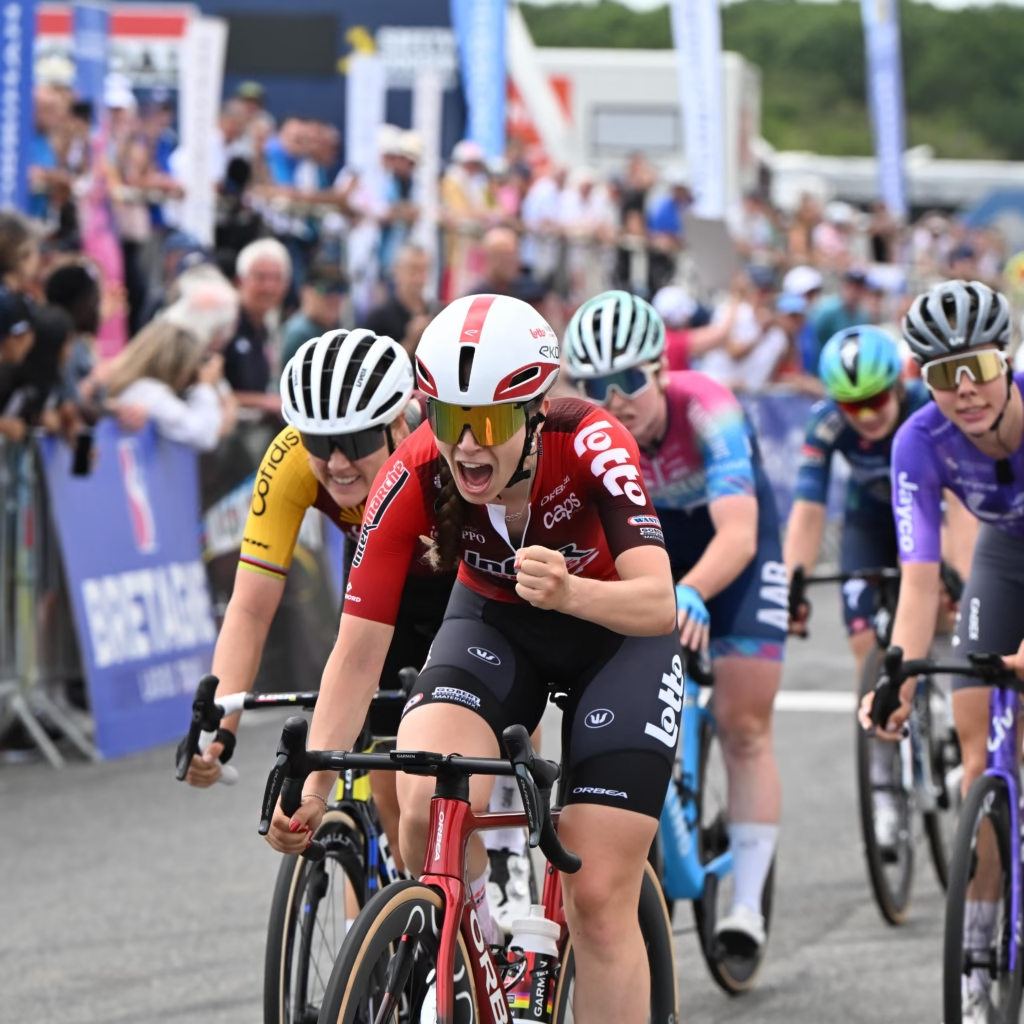 Photo Credit: Bretagne Ladies Tour
Lotto-Intermarché Ladies
Squad: Dina Boels, Elisabeth Ebras, Romina Hinojosa, Marieke Meert, Linda Riedmann, Sandrine Tas, Sterre Vervloet.
Leader: Linda Riedmann
Main goals: Breakaways, visibility and opportunistic stage results
Lotto-Intermarché approach the Tour from a very different position to the Women’s WorldTour superteams.
There is no rider expected to challenge for yellow and no sprinter around whom the peloton will reorganise itself. Their opportunities come from understanding which stages the bigger teams are willing to surrender.
Riedmann gives them a useful option once the road climbs, but the wider strategy should be based around breakaway representation and making the team’s presence count throughout the race rather than waiting for one perfect finish.
For teams in this position, a successful Tour can develop quickly. One rider gets into the correct breakaway, the GC teams decide she is harmless, and suddenly a stage win becomes realistic.
Ma Petite Entreprise
Squad: Noémie Abgrall, Laura Asencio, Alison Avoine, Morgane Coston, Clémence Latimier, Célia Le Mouel, Océane Mahé.
Leaders: Laura Asencio, Morgane Coston
Main goals: Breakaways and race visibility
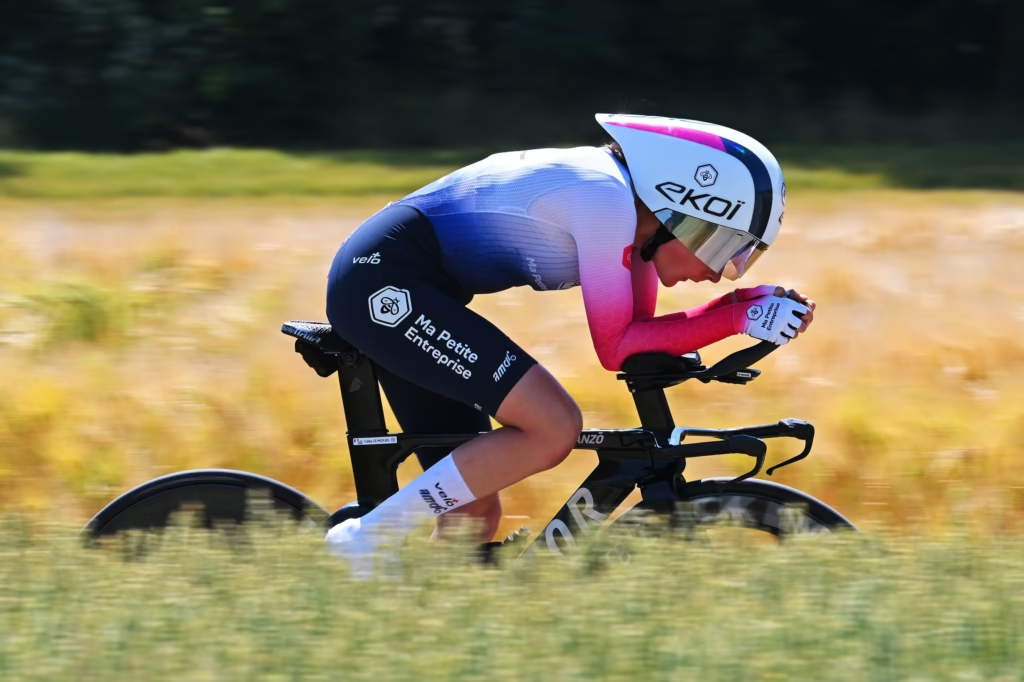
Ma Petite Entreprise’s Tour is almost entirely about creating opportunities.
They do not have the firepower to control the peloton against the WorldTour teams, so there is little value in waiting for the race to come to them. Their riders need to be active early, particularly once the GC begins spreading out and breakaways gain more freedom.
Asencio brings experience, while Coston is well suited to harder terrain. The wider squad can rotate attacking responsibilities rather than placing everything behind one rider.
The objective is simple enough: get ahead of the race often enough that one of those moves becomes the one the peloton fails to bring back.
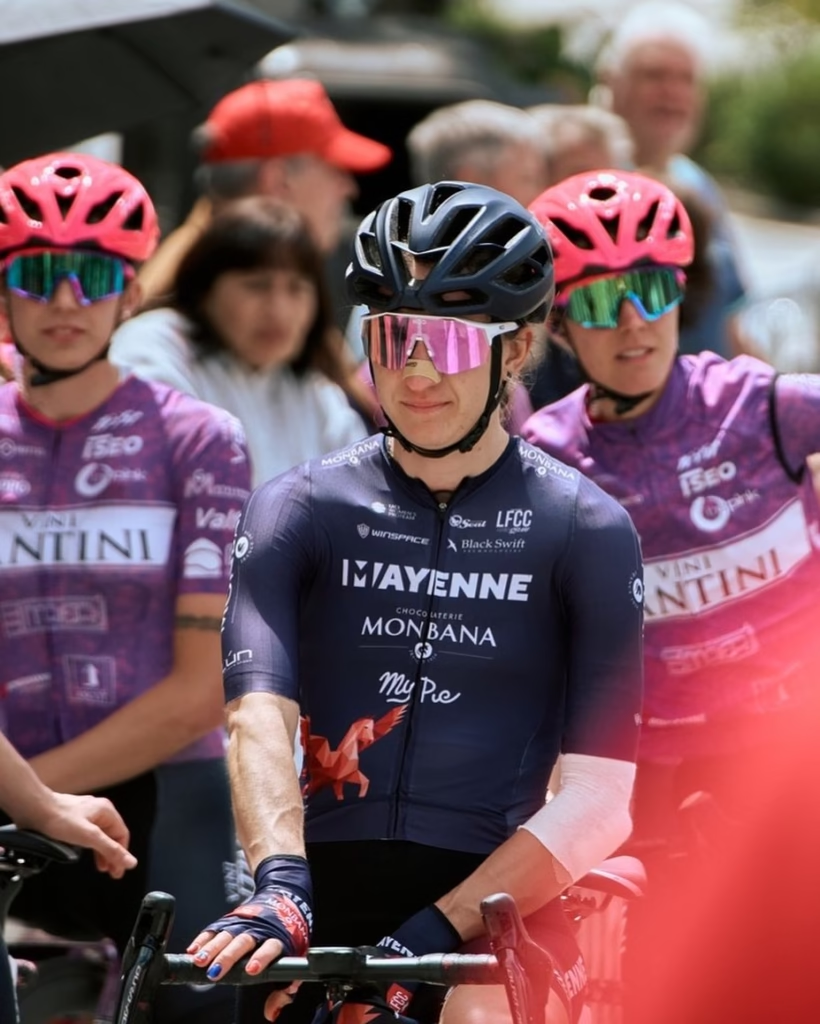
Mayenne-Monbana-Mypie
Squad: Marine Allione, Alice Coutinho, Kiara Lylyk, Fiona Mangan, Karolina Perekitko, Natalie Quinn, Constance Valentin.
Leader: Karolina Perekitko
Key riders: Fiona Mangan, Natalie Quinn
Main goals: Breakaways and stage hunting
Mayenne-Monbana-Mypie have no reason to race conservatively.
Perekitko is the most experienced reference within the squad and gives them a rider capable of handling difficult terrain, while Mangan has the profile for aggressive racing and Quinn arrives as an interesting young option.
Their chances rise dramatically on days when the GC teams decide not to control the breakaway. Once the opening stages create larger time gaps, Mayenne should be one of the teams most consistently trying to put riders ahead.
They are not expected to dominate a classification. A stage where they force the WorldTour teams to chase them is the route towards making this Tour matter.
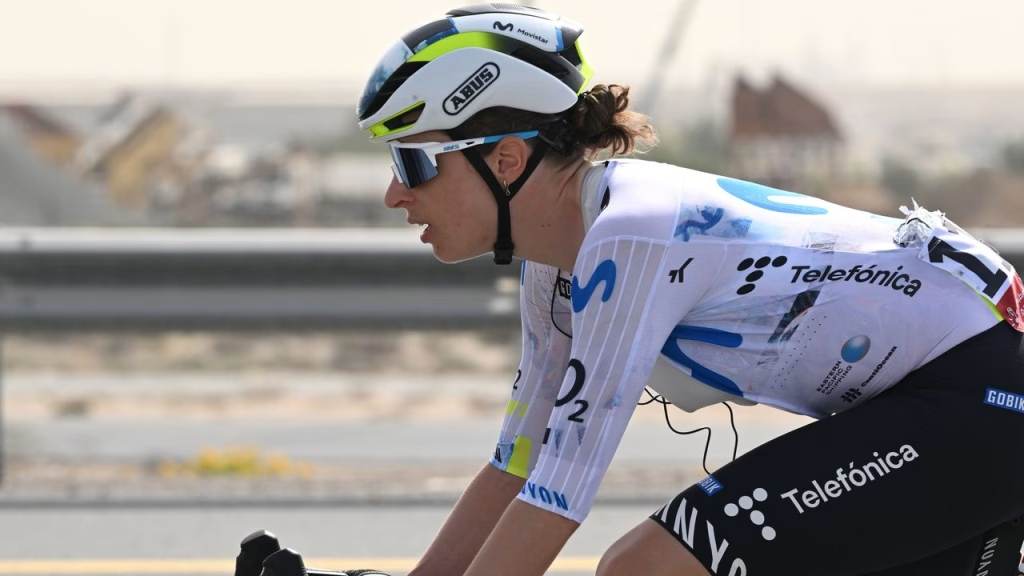
Movistar
Squad: Francesca Barale, Liane Lippert, Tota Magalhães, Sara Martín, Paula Ostiz, Marlen Reusser, Arlenis Sierra.
Leader: Marlen Reusser
Key riders: Liane Lippert, Arlenis Sierra, Sara Martín
Main goals: Yellow jersey, time trial victory and stages
Movistar have one of the most intriguing GC strategies because Marlen Reusser can force the Tour to develop differently from the way Vollering and Ferrand-Prévot would prefer.
Dijon gives Reusser a chance to establish a lead before the biggest mountains, and her improved climbing makes that advantage far more meaningful than it might once have been. If she takes yellow, Movistar can switch from creating the race to defending it.
Lippert is enormously important because she can remain useful on difficult terrain while also offering a stage-winning threat herself. Sierra covers reduced sprints, while Martín and Magalhães give the squad aggressive options when a breakaway can help the wider tactical plan.
The concern is mountain depth relative to FDJ or Visma. Reusser may have to defend parts of this Tour with fewer riders around her than Vollering or Ferrand-Prévot, which makes any time she gains before the mountains even more valuable.
The wider team structure is covered in the Movistar 2026 Women’s WorldTour team guide.
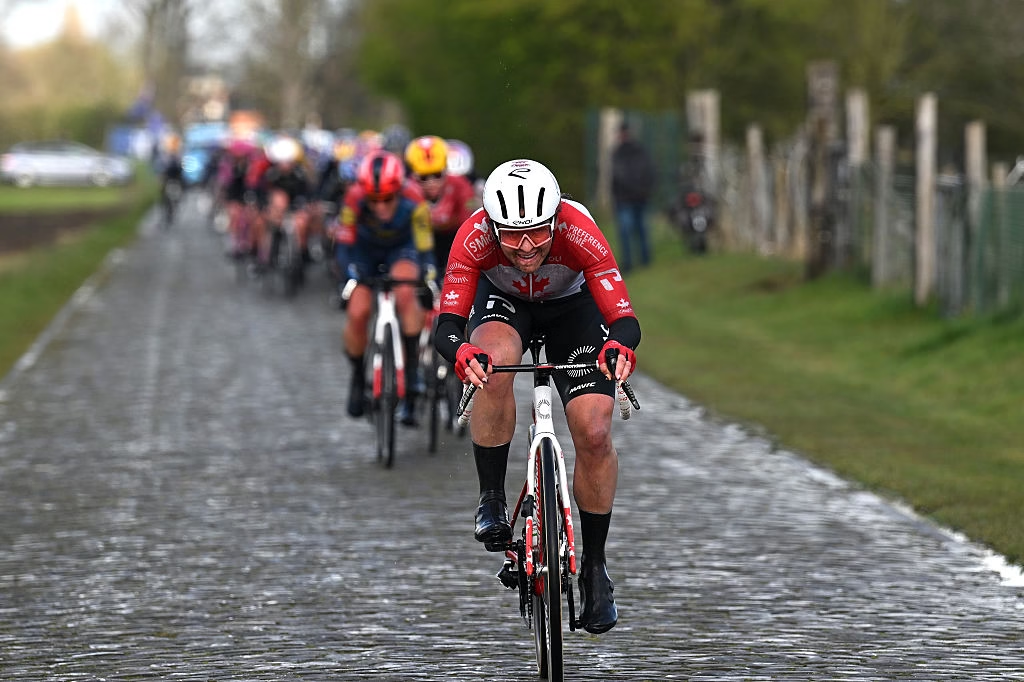 Photo Credit: Getty
St Michel-Preference Home-Auber 93
Squad: Heidi Franz, Alicia González, India Grangier, Alison Jackson, Emilie Morier, Solène Muller, Caroline Wreszin.
Leader: Alison Jackson
Key riders: Alicia González, Heidi Franz
Main goals: Breakaways and reduced finishes
St Michel have one rider with a particularly clear route towards a major result in Alison Jackson.
Jackson is at her best when a stage refuses to behave neatly. She can sprint from smaller groups, follow attacks and exploit tactical hesitation, making her much more dangerous in a broken race than against a full Wiebes lead-out.
González provides another fast finisher, while Franz can target the breakaway once the GC gaps give her freedom.
Like several invited teams, St Michel need to make the race less predictable rather than trying to imitate the tactics of squads with much greater depth.
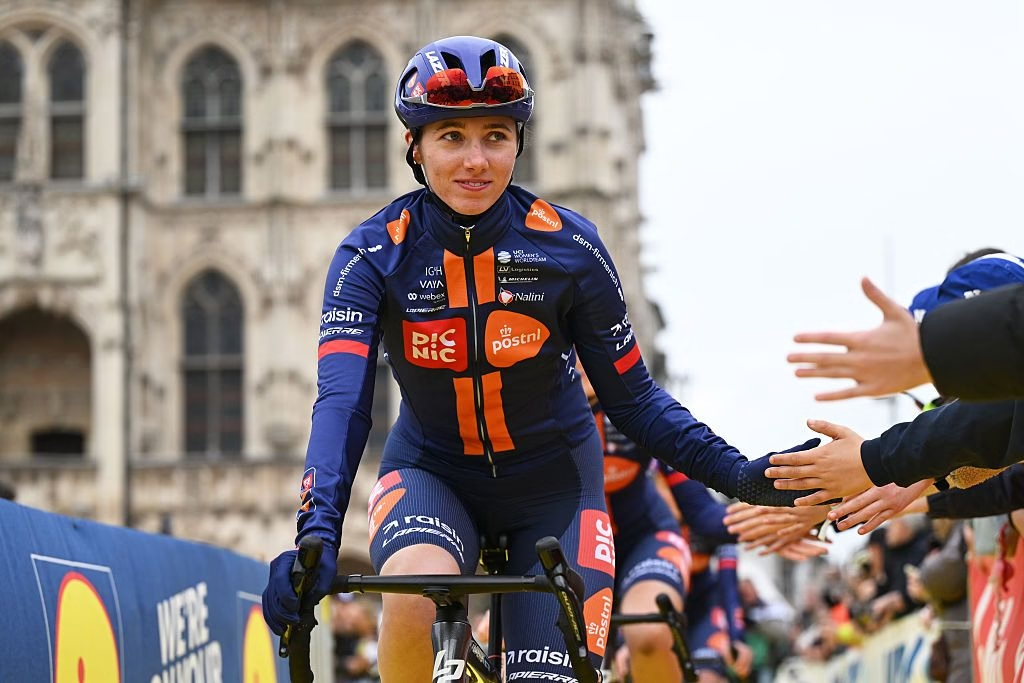 Photo Credit: Getty
Team Picnic PostNL
Squad: Eleonora Ciabocco, Robyn Clay, Lucie Fityus, Pfeiffer Georgi, Mia Griffin, Gaia Masetti, Josie Nelson.
Leaders: Eleonora Ciabocco, Pfeiffer Georgi
Key riders: Josie Nelson, Mia Griffin
Main goals: Stage wins, selective finishes and young rider GC
Picnic PostNL bring a young team without one dominant yellow jersey objective, which should encourage them to race proactively.
Pfeiffer Georgi remains their strongest established stage hunter. She is particularly dangerous when a race has become too difficult for the pure sprinters but not difficult enough for the specialist climbers.
Ciabocco gives the team an interesting longer-term GC and young rider option, while Nelson has the finishing speed to capitalise on selective racing. Griffin provides another faster card and Masetti can become useful when the race moves towards the breakaway.
The absence of a major GC favourite gives Picnic freedom. They can choose the rider who best fits each day’s terrain rather than preserving the same leader for nine stages. That fits the rebuilding squad described in our Team Picnic PostNL 2026 guide.
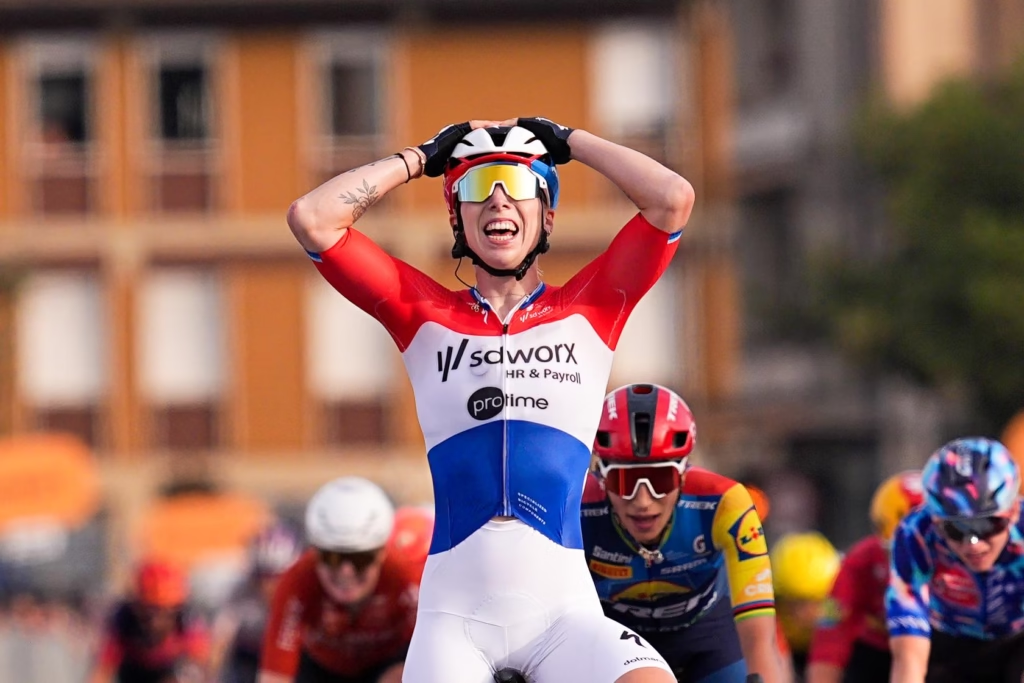
Team SD Worx-Protime
Squad: Mischa Bredewold, Valentina Cavallar, Elena Cecchini, Lotte Kopecky, Anna van der Breggen, Nienke Vinke, Lorena Wiebes.
Leaders: Anna van der Breggen, Lorena Wiebes
Key riders: Lotte Kopecky, Nienke Vinke
Main goals: GC podium or victory, sprint stages, green jersey, white jersey
SD Worx-Protime may have more separate winning options than any team in the race.
Anna van der Breggen gives them a legitimate GC contender after leading the Giro into its final stage. She can time trial and climb well enough to stay in the yellow jersey battle without requiring the route to develop in one particular way.
Lorena Wiebes is the benchmark for the bunch sprints and the obvious favourite for the green jersey if enough of the race comes back together. On stages too difficult for her, Lotte Kopecky becomes one of the strongest selective-finish riders in the peloton.
Vinke adds the defending Tour white jersey winner and another climbing option, while Cavallar gives the team additional depth on difficult terrain.
The issue is not whether SD Worx-Protime have enough talent. It is balancing objectives without spreading the team so widely that none receives enough support. Few squads have the luxury of treating that as their main problem, something reflected throughout the SD Worx-Protime 2026 team guide.
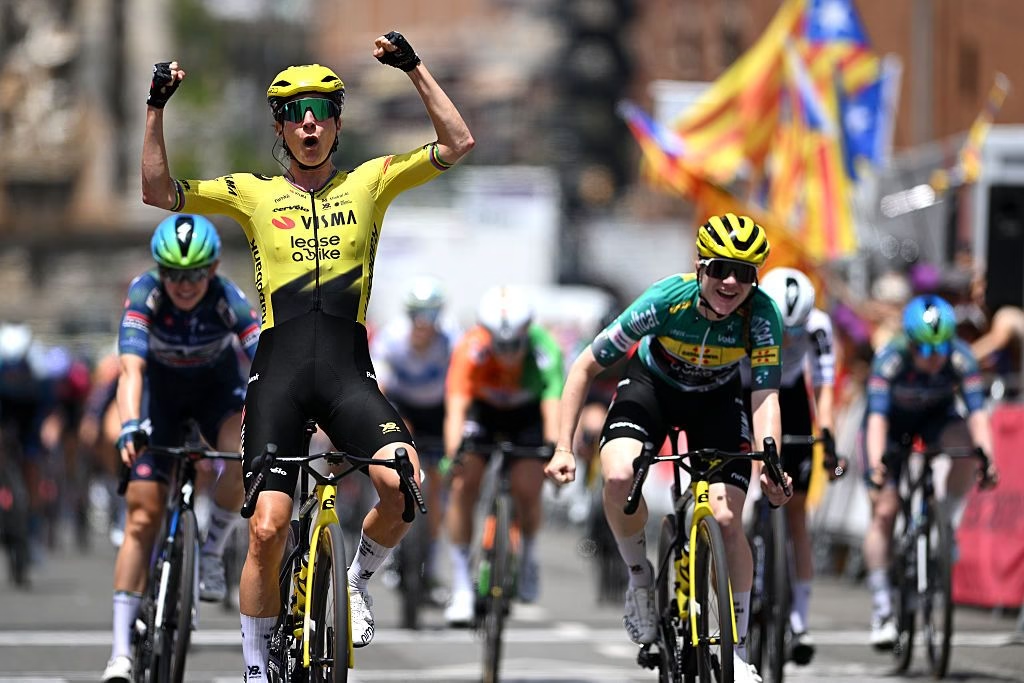 Photo Credit: Getty
Team Visma | Lease a Bike
Squad: Pauline Ferrand-Prévot, Femke de Vries, Sarah van Dam, Marianne Vos, Lieke Nooijen, Daniek Hengeveld, Marion Bunel.
Leader: Pauline Ferrand-Prévot
Key riders: Femke de Vries, Marianne Vos, Marion Bunel
Main goal: Defend the yellow jersey
Visma’s strategy has already been stated plainly by team management: the general classification is the priority.
Ferrand-Prévot returns as defending champion after structuring her preparation around another Tour peak. Her climbing remains the biggest weapon, while the team’s specific work on her time trial reflects the one area where a rider such as Reusser can put her under pressure before the mountains.
The support roles are clearly defined. De Vries is expected to be Ferrand-Prévot’s final mountain lieutenant, van Dam works immediately before her and Bunel adds another high-level climbing option.
Vos is the road captain and still a genuine stage-winning threat, while Nooijen and Hengeveld provide positioning and power earlier in stages.
It is a team designed less around accumulating results than making sure Ferrand-Prévot is exactly where she needs to be when the Tour is decided. The wider hierarchy around her is covered in the Team Visma | Lease a Bike 2026 team guide.
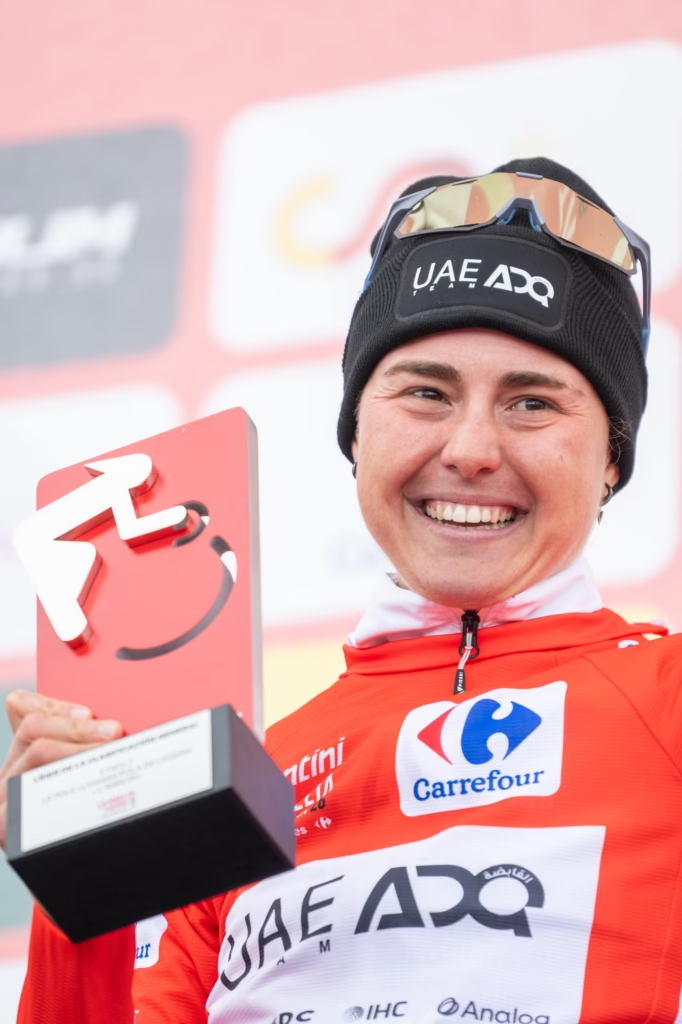 Photo Credit: Naike Erenozaga
UAE Team L’IMAD
Squad: Silvia Persico, Maëva Squiban, Elisa Longo Borghini, Dominika Włodarczyk, Brodie Chapman, Mavi García, Paula Blasi.
Leaders: Elisa Longo Borghini, Paula Blasi
Key riders: Silvia Persico, Mavi García, Maëva Squiban
Main goals: Yellow jersey, podium, stage wins and possibly polka dots
UAE have perhaps the most intriguing dual leadership in the race.
Elisa Longo Borghini brings the experience and all-round consistency required to challenge across nine stages. She can time trial, climb and race tactically without an obvious weakness for rivals to exploit.
Paula Blasi brings a different threat. Her 2026 Vuelta victory has established her as one of the strongest young climbers in the sport and means she cannot realistically begin the Tour as merely Longo Borghini’s domestique.
That gives UAE tactical freedom. One leader can attack while the other forces rivals to react, particularly once the race moves into the mountains.
Persico provides another strong option on selective terrain, García can work for the leaders or pursue the mountains jersey and Squiban is one of the best breakaway cards in the field. Chapman and Włodarczyk complete a squad with remarkably few weak points.
If UAE manage the dual-leadership question well, they may have the most tactically difficult team to race against. The broader roster context is covered in the UAE 2026 Women’s WorldTour team guide, published before the team’s current L’IMAD naming.

Uno-X Mobility
Squad: Katrine Aalerud, Teuntje Beekhuis, Marte Berg Edseth, Sigrid Ytterhus Haugset, Anouska Koster, Laura Tomasi, Alessia Vigilia.
Leaders: Katrine Aalerud, Alessia Vigilia
Key riders: Anouska Koster, Laura Tomasi
Main goals: Stage hunting, climbing results and breakaways
Uno-X have several riders capable of producing good results without one obvious route towards a major classification victory.
Aalerud remains their strongest option once the road becomes properly mountainous, while Vigilia gives the team another rider capable of converting selective racing into a result.
Koster brings considerable experience and can work both tactically and aggressively, while Tomasi offers more speed if the race produces a manageable finish.
The absence of yellow jersey pressure should allow Uno-X to adapt quickly. If one rider emerges with a useful GC position, they can protect it. If not, they have enough depth to commit heavily to breakaways instead.
That flexibility is consistent with the wider squad profiled in our Uno-X Mobility 2026 Women’s WorldTour team guide.
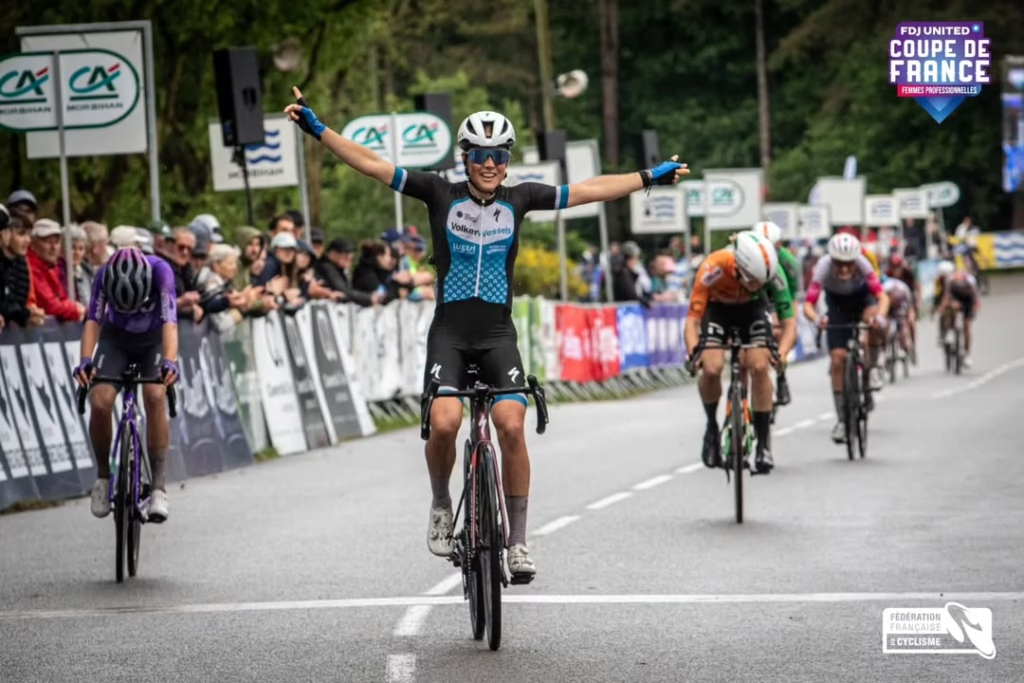
VolkerWessels Cycling Team
Squad: Anneke Dijkstra, Malou Eisen, Eline Jansen, Laura Molenaar, Maud Rijnbeek, Quinty Schoens, Sophie von Berswordt-Wallrabe.
Leader: Eline Jansen
Key riders: Laura Molenaar, Anneke Dijkstra
Main goals: Breakaways, sprint opportunities and visibility
VolkerWessels are another team whose success will be measured through stages rather than the final GC.
Jansen provides their strongest all-round reference and has the finishing ability to become relevant if a fast stage is reduced before the line. Molenaar and Dijkstra offer further possibilities when the terrain becomes harder.
The strategic imperative is to anticipate rather than react.
VolkerWessels cannot expect FDJ, Visma or SD Worx-Protime to create a race that naturally delivers them to victory. They need riders up the road, particularly once the Tour reaches terrain where the GC teams are willing to let non-threatening moves establish substantial advantages.
A breakaway surviving is their best chance of turning presence into a headline result.
Which teams are strongest for the yellow jersey?
Three teams begin with particularly clear routes towards yellow.
FDJ United-SUEZ have Vollering, the narrow individual favourite and a squad designed to maximise her climbing.
Team Visma | Lease a Bike have defending champion Ferrand-Prévot surrounded by explicitly defined support roles.
Movistar have Reusser, whose time trial gives them the chance to take the race into the mountains already defending rather than attacking.
Immediately behind them are UAE Team L’IMAD, with Longo Borghini and Blasi, Canyon SRAM with Niewiadoma-Phinney and Niedermaier, and SD Worx-Protime with van der Breggen.
Lidl-Trek and EF Education-Oatly lead the next tier through Fisher-Black and Kerbaol.
The individual hierarchy is covered in more detail in our Tour de France Femmes 2026 favourites guide.
Which teams are strongest for the sprint stages?
SD Worx-Protime set the standard because Wiebes remains the fastest sprinter in the race and Kopecky provides an elite alternative when the terrain becomes harder.
Fenix-Premier Tech have the clearest direct rival through Kool, while Pieterse gives them the same ability to switch leaders on selective days.
Lidl-Trek bring Balsamo, one of the strongest riders when sprint speed and climbing resilience both matter, while Canyon SRAM have Consonni.
Visma are harder to categorise because Vos does not need a conventional sprint to win. That may make her more dangerous on some stages than riders who are faster on paper.
-
 Photo Credit: Getty
Which teams are built to attack?
This is where the field becomes much broader.
EF can release Faulkner, Rüegg or Vallieres without necessarily compromising Kerbaol.
UAE have Squiban and García while their GC leaders sit behind.
Fenix can use Kastelijn or Casasola when Kool and Pieterse are not the day’s plan.
AG have Ghekiere, Laboral Kutxa have Ostolaza, while Human Powered Health have several riders whose chances improve when the race becomes selective.
For the invited and smaller teams, attacking is less an alternative strategy than a necessity. Ma Petite Entreprise, Mayenne-Monbana-Mypie, Lotto-Intermarché, St Michel and VolkerWessels all need to recognise the days when the biggest squads are prepared to lose control.
Our Tour de France Femmes 2026 breakaway specialists guide goes deeper into the riders most likely to benefit.
Tour de France Femmes 2026 teams at a glance
| Team | Main leader(s) | Primary objective |
|---|---|---|
| AG Insurance-Soudal | Kim Le Court-Pienaar | Top-five GC, stages, QOM |
| Canyon SRAM | Kasia Niewiadoma-Phinney, Antonia Niedermaier | Yellow, white, stages |
| Cofidis | Amalie Dideriksen, Julie Bego | Sprints, white, breakaways |
| EF Education-Oatly | Cédrine Kerbaol | GC, stages |
| FDJ United-SUEZ | Demi Vollering | Yellow jersey |
| Fenix-Premier Tech | Puck Pieterse, Charlotte Kool | Stage wins |
| Human Powered Health | Thalita de Jong, Lily Williams | Stage wins, breakaways |
| Laboral Kutxa-Euskadi | Usoa Ostolaza | Stages, QOM |
| Lidl-Trek | Niamh Fisher-Black | GC, sprints, white |
| Liv AlUla Jayco | Monica Trinca Colonel, Ruby Roseman-Gannon | Stage wins |
| Lotto-Intermarché Ladies | Linda Riedmann | Breakaways |
| Ma Petite Entreprise | Laura Asencio, Morgane Coston | Breakaways |
| Mayenne-Monbana-Mypie | Karolina Perekitko | Breakaways |
| Movistar | Marlen Reusser | Yellow, TT |
| St Michel-Preference Home-Auber 93 | Alison Jackson | Stages, breakaways |
| Team Picnic PostNL | Pfeiffer Georgi, Eleonora Ciabocco | Stages, young rider |
| Team SD Worx-Protime | Anna van der Breggen, Lorena Wiebes | GC, sprints, green |
| Team Visma | Lease a Bike | Pauline Ferrand-Prévot |
| UAE Team L’IMAD | Elisa Longo Borghini, Paula Blasi | Yellow, podium, stages |
| Uno-X Mobility | Katrine Aalerud, Alessia Vigilia | Stage hunting |
| VolkerWessels Cycling Team | Eline Jansen | Breakaways, stages |
The 21 teams mean a maximum field of 147 riders, with seven riders per squad. The breakdown between the 14 Women’s WorldTeams and seven ProTeams is covered in our guide to how many riders and teams are in the Tour de France Femmes 2026.
The strongest teams are not necessarily the ones with the greatest number of possible winners.
FDJ and Visma have relatively simple objectives because almost every tactical decision can be judged against what it does for Vollering or Ferrand-Prévot. Movistar are similarly centred on Reusser, even if their way of winning will look very different.
SD Worx-Protime, UAE, Canyon SRAM and Lidl-Trek have more complicated decisions because they carry several genuine objectives at once.
For the remaining teams, complexity can be an advantage. They do not need to control the Tour. They need to recognise the moment when the teams trying to control it decide that somebody else can have the road.
Across nine stages, that should ensure almost every team gets at least one day where its preferred version of the race becomes possible.

